...just because I feel like it. :)
This is a poem called The Hound of Heaven. It's a little heavy on the poetic words--like "plashy"--but I do love it; especially the last verse, where Christ, the loving Hunter, speaks to the poet's soul:
"Seeing none but I makes much of Naught" (He said).
"And human love needs human meriting ---
How hast thou merited,
Of all Man's clotted clay, the dingiest clot.
Alack! Thou knowest not
How little worthy of any love thou art.
Whom wilt thou find to love ignoble thee,
Save me, save only me?
All which I took from thee, I did'st but take,
Not for thy harms,
But just that thou might'st seek it in my arms.
All which thy child's mistake fancies as lost,
I have stored for thee at Home.
Rise, clasp my hand, and come."
Halts by me that Footfall.
Is my gloom, after all,
Shade of His hand, outstretched caressingly?
"Ah, Fondest, Blindest, Weakest,
I am He whom thou seekest.
Thou dravest Love from thee who dravest Me."
It's enough to make you wish you could write poetry, isn't it? I can't; my writing bent doesn't bend that way--I tend to want to throw in some characters and dialogue and swordfights and things--but I like reading other people's poetry.
I'll write a cute-kids post here pretty soon; at the moment I'm about to go to bed, and this poem was on my mind.
Cheers,
Breanna
Wednesday, September 29, 2010


Tuesday, September 28, 2010
The More Things Change...
I have been reading Catherine Beecher's (sister to Harriet Beecher Stowe) book The American Woman's Home, which was a free book available on the Kindle. I've been wanting to read it since it was referenced in my favorite housekeeping book, Home Comforts. It's been amusing.

It shows me that weird attitudes about housekeeping, food, and childrearing have been mixed in with sound advice as far back as 1873... and what's more, that they're the same weird attitudes I've met in modern, "anti-establishment" books. For instance, there's the idea that certain things that may or may not be Stupid Ideas, i.e., corsets or eating food the author deems unwholesome (hot bread), are not only Stupid but Evil and Sinful. Modern books are usually a little more subtle about condeming things morally that, honestly, even if the authors are correct are only dumb, not sins, but Beecher is a Victorian and a Transcendentalist and has no problem whatsoever with saying something is a sin.
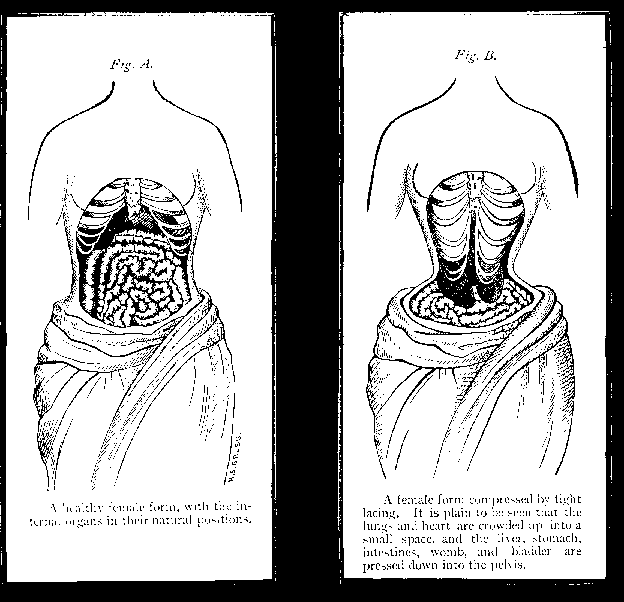
Take corsets. While I agree that wearing one is probably unhealthy and definitely uncomfortable, and while this picture should be enough to convince anyone that smushing your waist every day is a bad idea, I wouldn't go so far as to say that people who sell corsets are murderers. Maybe they're just dumb, disagree that corsets are dangerous, or in fact are right and corsets are merely uncomfortable and not death by whalebone. (Incidentally, loss of the whaling industry probably had more to do with why corsets went out of fashion than scads of women realizing that they were squishing their intestines down into their pelvi.)
 ]
]On the other hand some of her advice is sound and universal---things like, if you want to run a cheeful household:
1. Get up early.
2. Speak kindly, no matter how annoyed you are, because interruptions ARE going to happen--and if you can't say something nice, don't say anything at all, even to kids and servants.
3. Get most of your housework done before noon.
4. Arrange your work areas so that you don't have to take extra steps.
5. Spend more thought on making nice bread, meat, and vegetables than you do on making desserts and extras, and your table will be better furnished.
6. Decorate with what you can afford, but don't buy anything that isn't pretty.
C.S. Lewis advises that we read old books as an antidote to the myopia of the new ones, which after all share all of our own prejudices, biases, and viewpoint squints. The old books have prejudices too--Beecher is awfully sniffy about Irish servants--but the old prejudices are easy to see, because we usually don't share them. Beecher's chapter on servants contains a long lecture on why domestic service was, or ought to have been, different in America than it was in Europe. In that chapter she points out basically that servants are people too, and that the condescending manner that many employers treat them is, in fact, inappropriate. She then proceeds to demolish the ideas that lead to the condescending manner.
It struck me that the condescending manner that most people used to have toward their "help" is exactly the same manner that a lot of people have toward women who stay home to keep house, and that it comes from the same wrong ideas--that domestic work is easy (but also drudgery), boring, mind-numbing, and that people who engage in it should be directed by those who don't--and grateful for the direction!
Made me feel awesome about ignoring magazine articles about organizing my photos written by women who have two nannies and three housekeepers, or TV spots about children's needs done by people who see their kids on alternate weekends.
A lot of the hysteria you find in housekeeping/childrearing advice appears to have simply been regurgitated since Beecher's time, and if you think about it, the advice is very Transcendentalist. I doubt Beecher originated the theories, either.
So if you have a Kindle or other access to old books, I recommend taking your controversy of choice and looking up what the Victorians (or older) had to say on the subject. It might be illuminating to see exactly how old the new ideas are.
Cheers,
Breanna
Saturday, September 25, 2010
Just So You Know...
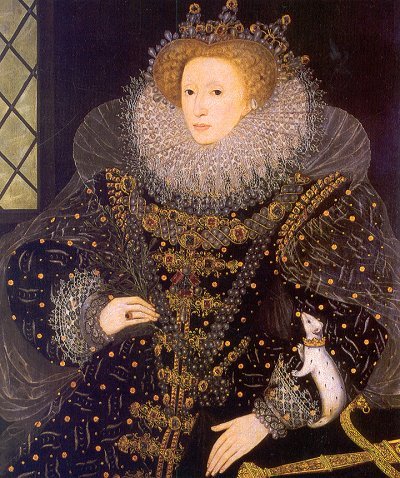 |
| I think she meant this kind of mighty queen. |
So yesterday as we're building a Lego castle, Miss Boo addressed me as "O Mighty Queen."
For a half hour.
This led to sentences like, "can I have the markers, O mighty queen? Thanks, mighty queen."
It's certainly a boost to the ego of someone shlumping around in a maternity shirt that has been daubed with various substances by Buddy and a pair of scuf slippers. Makes me feel like I ought to have a tiara on my (unwashed) hair.
The magic faded after a while when we became afraid that she'd shoved an eraser up her nose, but I tried to act regal the rest of the day.
I just thought I'd let you know about my new title, if you need to know how to address my letters...
Cheers,
Breanna
(a.k.a., The Mighty Queen)
Friday, September 24, 2010
Doing Much Better
We are ourselves again.

Miss Boo was a little concerned today that Daddy was at work without his pajamas--they were laying there on his bed. What if he needed them?

Flashes can be bright.

"Mama, Buddy's doing just fine."
I forgot to tell you that when we went shopping for the Potty Party that Miss Boo was commenting on everything in the store. It went like this:
Miss Boo: What's that, Mama?
Me: Those are paper napkins.
Miss Boo: They're adorable! And there, Mama, what's that?
Me: That's a bottle of Tyelenol.
Miss Boo: Oh! It's so adorable!
She didn't seem to actually want any of these Adorable Things but enjoyed saying that most of the store was adorable. All I can think of is that I must have said something was adorable once, and she latched onto it as the Thing You Say While Shopping. (Better than her picking up on something I say more often, which is "We don't need it at that price.")
Buddy has a lingering cough today, but no fever, and is his own sunny self again, thank the Lord. We are staying home from church this week because we're heathens, but mostly because we don't want to spread possible RSV around to a congregation that might have preemies in it. Other than that, we are back to normal.
Cheers,
Breanna
Wednesday, September 22, 2010
This is Me Venting
Sort of. Mostly. Ok, totally.
Like about how much it stinks to be sick while you're pregnant...or anyway, how much it stinks to experience those few hours before you're really sick, where you're going, "Wait. It's not cold in here--the thermometer says it's 68F. So why do I have chills?" Then you look down at the feverish, squalling, trying-to-pull-your-hair-because-it-calms-him boy in your lap, and go "Oh."
Then you realize that maybe your neck hurting isn't just because you spent the night wedged between two toddlers who were the approximate temperature of two incandesant lightbulbs that have been on since 1986.
Then, if you're a nurse, you go, "Oh great. I've probably got spinal meningitis and THAT will just be fabulous."
Then, of course, you go talk yourself down and point out to yourself it's really really unlikely that you have spinal meningitis. Maybe you just have a sore neck, Paranoia Jones.
The thing about being a mom is that when you're sick, you naturally have less patience and want to lay in one spot, not do anything, and be cranky/sleep. Only when your kids are sick at the same time that you are, you don't have that option. They can't stagger to the kitchen and get their own Pedialyte, and they poop more than ever, and they get sad when the orange crayon doesn't magically turn purple when they wish it would. So you have to twist your sore neck and stagger around getting Pedialyte and purple crayons, and listening to Dora and Diego go on about saving water again and again and again.
Listen, motherhood has its perks...and I know that the Lord is with me (Miss Boo told me today during a particularly desperate prayer aloud that I didn't have to shout at Him)... but let's face it, motherhood has its--moments, as well.
All of you with healthy wives--go get them something nice tonight, huh? Flowers or something? The Husband is too sick and weary himself to do anything of the sort, but it's just about as nice to see the appreciative, pitying look in his eye when he says "Well, honey, I like leftovers."
Oh, and the dude bought me a Kindle a while ago that is supposed to be delivered tonight. So how cool is that? The thing holds 3200 books, and you can get software to upload PDFs and MS Word documents to it, and it has a nifty slide-out booklight so I can read at night while sitting on Miss Boo's bed as she falls asleep. (No, Grammy, reading in dim light doesn't damage your eyes. I looked it up--it's been disproven, like the whole bacon-gives-you-heart-attacks thing. You can stop feeling guilty about my high prescription; it wasn't your fault for letting me read too much/forcing me to use a booklight more.)
There, I've cheered me up.
Cheers,
Breanna
Like about how much it stinks to be sick while you're pregnant...or anyway, how much it stinks to experience those few hours before you're really sick, where you're going, "Wait. It's not cold in here--the thermometer says it's 68F. So why do I have chills?" Then you look down at the feverish, squalling, trying-to-pull-your-hair-because-it-calms-him boy in your lap, and go "Oh."
Then you realize that maybe your neck hurting isn't just because you spent the night wedged between two toddlers who were the approximate temperature of two incandesant lightbulbs that have been on since 1986.
Then, if you're a nurse, you go, "Oh great. I've probably got spinal meningitis and THAT will just be fabulous."
Then, of course, you go talk yourself down and point out to yourself it's really really unlikely that you have spinal meningitis. Maybe you just have a sore neck, Paranoia Jones.
The thing about being a mom is that when you're sick, you naturally have less patience and want to lay in one spot, not do anything, and be cranky/sleep. Only when your kids are sick at the same time that you are, you don't have that option. They can't stagger to the kitchen and get their own Pedialyte, and they poop more than ever, and they get sad when the orange crayon doesn't magically turn purple when they wish it would. So you have to twist your sore neck and stagger around getting Pedialyte and purple crayons, and listening to Dora and Diego go on about saving water again and again and again.
Listen, motherhood has its perks...and I know that the Lord is with me (Miss Boo told me today during a particularly desperate prayer aloud that I didn't have to shout at Him)... but let's face it, motherhood has its--moments, as well.
All of you with healthy wives--go get them something nice tonight, huh? Flowers or something? The Husband is too sick and weary himself to do anything of the sort, but it's just about as nice to see the appreciative, pitying look in his eye when he says "Well, honey, I like leftovers."
Oh, and the dude bought me a Kindle a while ago that is supposed to be delivered tonight. So how cool is that? The thing holds 3200 books, and you can get software to upload PDFs and MS Word documents to it, and it has a nifty slide-out booklight so I can read at night while sitting on Miss Boo's bed as she falls asleep. (No, Grammy, reading in dim light doesn't damage your eyes. I looked it up--it's been disproven, like the whole bacon-gives-you-heart-attacks thing. You can stop feeling guilty about my high prescription; it wasn't your fault for letting me read too much/forcing me to use a booklight more.)
There, I've cheered me up.
Cheers,
Breanna
Tuesday, September 21, 2010
A Few Thoughts...
1. I read this blog post about a U of Chicago law prof, who makes $450k per year, worrying about how he's going to make ends meet if Obama raises his taxes. It was a little absurd, though heaven knows I'm not a "rich guys should pay more taxes 'cause they're richer than me" person. The outrage in the comments was predictable.
Makes me wonder, though, whether those outraged people have thought about how our worrying about food must look to people in this country and others who don't even have food that is safe, or enough food. I bet there is someone, somewhere, wishing they could afford a dozen eggs who reads some of this chatter about "local, fresh, organic" and thinks, "seriously? they're worried over whether the chicken who laid their eggs got to play outside, and for that they'll pay $12 per dozen?"
If you like to spend extra on fancy food as a hobby, more power to you, but I think being ashamed of eating like poor people is silly. Most of the world is poor people, dang it. I'm rich in that I get to choose what I'm going to have for dinner each night. Do you realize how rare that is? For most of history, it would have been a given that we'd have essentially the same thing every day (beans/corn, potatoes/cabbage/bacon, bread/cheese) plus whatever the garden was producing that week.
2. Sick kids who are too young for reason don't understand that the best thing for them is to lay still and recover. They think you are being a big mean jerk to make them lay still and recover when what they really want is to run around and make their oxygen saturations drop like rocks and steal their siblings' toys. Someday I am finally going to understand the messages that the Lord smacks me across the face with and realize that whenever God seems like a big mean Jerk, perhaps it's that I really am being as unreasonable as a croupy baby who won't go to sleep because he wants to eat a wristwatch.
(How's that for a confusing metaphor?)
3. There's nothing wrong with canned soup.
4. I can't hate NickJr too much, because they're about the only way I managed to keep both kids relatively death-free on Tuesday, but gee, I really hate the songs that get stuck in your head. Like the one from the Backyardigans Zorro-librarian episode (which we have watched no fewer than 20 times in the last two days): "I'm going to get that book back/going to get that book/going to get that book back/going to get that book". I can't get it out of my brain and am considering trying to remove it with an icepick, or failing that, listening to "Ice Ice Baby" until that gets stuck in my head.
5. Read a blog post on a pastor's blog about prayer life and what constitutes a "good" prayer life (can you tell I was reading a lot on the internet today, because you can read on the internet while a feverish child drapes himself across you to nap?). Yes, all this stuff we've been learning about food and freedom and trusting God? Well, it applies in the spiritual life too--there are only a few things that Christians are required to do, and most of the rest of the stuff we think is necessity is just... habit.
(Required: praying. Habit: you have to keep a prayer journal where you write down your prayers, using the ACTS model to organize them. And so forth.)
This isn't a cop-out, or a pass, with regard to food or spirituality--we're not going to sin more that grace may abound. But it is a freedom for you to get with the Lord, study the Bible, and decide whether the typical way of doing things is really the way God built you to do them. Remember my silliness, feeling ashamed because I have to memorize Scripture with songs meant for middle-schoolers? Well, pooh to feeling ashamed. I memorized it, didn't I? Here's the second thing: maybe even memorization doesn't work for you, and that's ok. Yes, I know David hid the Word in his heart in order to keep himself from sin. That was David. Maybe what God wanted for him was different from what God wants for you. Almost certainly it was, in fact.
Memorizing Scripture is valuable and useful, but the moment it becomes something that sets me above other people or a task that distracts me from my relationship with the Lord, then it's just a habit and it might be time to let it go.
And now, enough talk, I'm going to bed.
Cheers,
Breanna
Makes me wonder, though, whether those outraged people have thought about how our worrying about food must look to people in this country and others who don't even have food that is safe, or enough food. I bet there is someone, somewhere, wishing they could afford a dozen eggs who reads some of this chatter about "local, fresh, organic" and thinks, "seriously? they're worried over whether the chicken who laid their eggs got to play outside, and for that they'll pay $12 per dozen?"
If you like to spend extra on fancy food as a hobby, more power to you, but I think being ashamed of eating like poor people is silly. Most of the world is poor people, dang it. I'm rich in that I get to choose what I'm going to have for dinner each night. Do you realize how rare that is? For most of history, it would have been a given that we'd have essentially the same thing every day (beans/corn, potatoes/cabbage/bacon, bread/cheese) plus whatever the garden was producing that week.
2. Sick kids who are too young for reason don't understand that the best thing for them is to lay still and recover. They think you are being a big mean jerk to make them lay still and recover when what they really want is to run around and make their oxygen saturations drop like rocks and steal their siblings' toys. Someday I am finally going to understand the messages that the Lord smacks me across the face with and realize that whenever God seems like a big mean Jerk, perhaps it's that I really am being as unreasonable as a croupy baby who won't go to sleep because he wants to eat a wristwatch.
(How's that for a confusing metaphor?)
3. There's nothing wrong with canned soup.
4. I can't hate NickJr too much, because they're about the only way I managed to keep both kids relatively death-free on Tuesday, but gee, I really hate the songs that get stuck in your head. Like the one from the Backyardigans Zorro-librarian episode (which we have watched no fewer than 20 times in the last two days): "I'm going to get that book back/going to get that book/going to get that book back/going to get that book". I can't get it out of my brain and am considering trying to remove it with an icepick, or failing that, listening to "Ice Ice Baby" until that gets stuck in my head.
5. Read a blog post on a pastor's blog about prayer life and what constitutes a "good" prayer life (can you tell I was reading a lot on the internet today, because you can read on the internet while a feverish child drapes himself across you to nap?). Yes, all this stuff we've been learning about food and freedom and trusting God? Well, it applies in the spiritual life too--there are only a few things that Christians are required to do, and most of the rest of the stuff we think is necessity is just... habit.
(Required: praying. Habit: you have to keep a prayer journal where you write down your prayers, using the ACTS model to organize them. And so forth.)
This isn't a cop-out, or a pass, with regard to food or spirituality--we're not going to sin more that grace may abound. But it is a freedom for you to get with the Lord, study the Bible, and decide whether the typical way of doing things is really the way God built you to do them. Remember my silliness, feeling ashamed because I have to memorize Scripture with songs meant for middle-schoolers? Well, pooh to feeling ashamed. I memorized it, didn't I? Here's the second thing: maybe even memorization doesn't work for you, and that's ok. Yes, I know David hid the Word in his heart in order to keep himself from sin. That was David. Maybe what God wanted for him was different from what God wants for you. Almost certainly it was, in fact.
Memorizing Scripture is valuable and useful, but the moment it becomes something that sets me above other people or a task that distracts me from my relationship with the Lord, then it's just a habit and it might be time to let it go.
And now, enough talk, I'm going to bed.
Cheers,
Breanna
Yep!
It IS croup. Or RSV. They weren't sure which at the doctor's office, but as the treatment for each is essentially the same in a kid Buddy's age, it doesn't matter too much.
So we are watching Muzzy (in German) over and over and over again, to get him to sit still, pouring "juice tea" (apple juice + weak chamomile tea) down his throat, endangering the state's supply of Vick's VapoRub, and forcing our ancient hot water heater to do double duty.
I made a lasagna to stick in the oven tonight; I love those no-boil noodles. Not that I would turn down the night off from cooking, but taking one feverish boy and one girl who is valiantly denying the obvious (that her red eyes, crabby disposition, and general lack of energy mean she's getting the crud) to a restaurant does not seem like a good idea. And I don't want pizza. We feel guilty buying from places other than the one where Uncle Dunkle manages, these days.
You can keep praying for us. I would rather not get this stuff, since what with Littleman on the way I can't take much more than, say, a Lifesaver and a (one) Tyelenol. And I'm a wuss if you like, but a cold (in a grownup RSV is often just like a cold) with unrelieved symptoms is no fun, especially when you're drinking lots of fluids while carrying a baby who really likes to play bladder soccer.
Cheers,
Breanna
So we are watching Muzzy (in German) over and over and over again, to get him to sit still, pouring "juice tea" (apple juice + weak chamomile tea) down his throat, endangering the state's supply of Vick's VapoRub, and forcing our ancient hot water heater to do double duty.
I made a lasagna to stick in the oven tonight; I love those no-boil noodles. Not that I would turn down the night off from cooking, but taking one feverish boy and one girl who is valiantly denying the obvious (that her red eyes, crabby disposition, and general lack of energy mean she's getting the crud) to a restaurant does not seem like a good idea. And I don't want pizza. We feel guilty buying from places other than the one where Uncle Dunkle manages, these days.
You can keep praying for us. I would rather not get this stuff, since what with Littleman on the way I can't take much more than, say, a Lifesaver and a (one) Tyelenol. And I'm a wuss if you like, but a cold (in a grownup RSV is often just like a cold) with unrelieved symptoms is no fun, especially when you're drinking lots of fluids while carrying a baby who really likes to play bladder soccer.
Cheers,
Breanna
Croup
I think Buddy has it. Hooray.
We're going to the doctor as soon as the office opens this morning, and seeing if we can resolve the paradox of a boy happily chomping toast and running around when he's not listless, coughing, and glowing like a lightbulb with fever. Sigh.
Pray for us, eh?
Cheers,
Breanna
We're going to the doctor as soon as the office opens this morning, and seeing if we can resolve the paradox of a boy happily chomping toast and running around when he's not listless, coughing, and glowing like a lightbulb with fever. Sigh.
Pray for us, eh?
Cheers,
Breanna
Saturday, September 18, 2010
A Note About "Normal Range"
Oh, and I forgot to mention: do you know how they came up with "normal range" for blood pressures?
They used the average blood pressures from GIs during their WWII draft physicals. So blood pressure is based on an active, young, male population, and doesn't take into account the normal range for people who are elderly, children, fat, female, or pretty much anything except acceptable for military service. (Yes, the BP range actually excludes half the population. Sensible, ain't it?)
They came up with the "normal range" of healthy pulse (60-100 beats per minute) because that's the easiest range to read on an EKG strip.
The things you learn in nursing school.
They came up with 23 hours as the "desirable" length of a first-time labor and 6 hours for subsequent labors pretty much... randomly (and because that's what insurance companies think is a reasonable amount of time to pay for a woman's stay in the hospital). Which is one reason why I... um, lied when the nurse asked me, with Miss Boo, how long I had been in labor; it was really about 27-28 hours, all told, but I didn't want to be shipped off to a c-section at hour 24.
So be a little skeptical about "normal range". If you fall barely outside it, perhaps it's not quite as important as if you fall widely outside it.
Cheers,
Breanna
They used the average blood pressures from GIs during their WWII draft physicals. So blood pressure is based on an active, young, male population, and doesn't take into account the normal range for people who are elderly, children, fat, female, or pretty much anything except acceptable for military service. (Yes, the BP range actually excludes half the population. Sensible, ain't it?)
They came up with the "normal range" of healthy pulse (60-100 beats per minute) because that's the easiest range to read on an EKG strip.
The things you learn in nursing school.
They came up with 23 hours as the "desirable" length of a first-time labor and 6 hours for subsequent labors pretty much... randomly (and because that's what insurance companies think is a reasonable amount of time to pay for a woman's stay in the hospital). Which is one reason why I... um, lied when the nurse asked me, with Miss Boo, how long I had been in labor; it was really about 27-28 hours, all told, but I didn't want to be shipped off to a c-section at hour 24.
So be a little skeptical about "normal range". If you fall barely outside it, perhaps it's not quite as important as if you fall widely outside it.
Cheers,
Breanna
Weight and High (Everything)
We don't need to repost our disclaimer about not trusting a random blogger for medical advice, do we? If you don't know me--and by know me, I mean, "are related to me"--then I recommend strongly that you and your doctor research these things for yourselves. I COULD be a kook, you know. I'm not, but I could be.
You may have guessed that, when I said I'd post about weight and hypertension yesterday, that I hadn't quite internalized the realities of taking someone to the potty every twenty minutes all day, and handing out (and managing) potty prizes.
For instance, the idea that you have to take all the prizes with you whenever you go to the potty, so your little brother won't touch them. Or that choosing between two potty chairs can be like a gourmet trying to decide whether to order the Chablis with the brie.
Anyway.
No, according to Health At Every Size by Linda Bacon, being heavier does not cause high blood pressure. The two things often occur at the same time, but what's our mantra? Correlation is not causation.
Thin people frequently have high blood pressure too, and the evidence shows that when heavy people lose weight via dieting, their blood pressure measures get a lot worse--even while they're temporarily thin. (Because, as we know, 99.9% of people will regain weight they lose.)
One possibility is that larger people may just have slightly higher blood pressures than thin people and that this is not pathological--it just takes a higher pressure to move the blood through their tissues. Makes sense, since there's further for the blood to go.
Bottom line? Don't try to lose weight to improve your blood pressure readings. Indeed, you may want to do some research to figure out if they are definitely pathological. If they're like, 220/170, they probably are. If they're 131/90, perhaps not so much. Also, if you have other conditions like diabetes or kidney problems, you may have to manage your blood pressure in ways that a person without those conditions wouldn't have to. So, before you throw your blood pressure pills away, be sure that it's a good idea. (Also be sure that they're the kind you can just stop, like lisinopril, and not the kind that give you rebound hypertension, like atenolol--a call to your doctor would be a great idea.)
It looks like (surprise surprise) stress and genetics play a much larger role in blood pressure than weight.
What about high blood sugars/diabetes?
Well, the research seems to be that weight gain is actually an early symptom of type 2 diabetes, not the cause of it. Also, losing weight 1) doesn't improve blood sugar readings long term and 2) makes you more likely to die of diabetes than a heavier person and 3) the weight cycling which is overwhelmingly likely (losing and then gaining back) is incredibly harmful to your blood pressure and other measures, which are more fragile in diabetics than in non-diabetics.
So don't lose weight to improve your diabetes. Instead, concentrate on eating quality food and increasing your activity in pleasurable ways.
In fact, for pretty much every medical problem that people routinely blame on weight, "eat quality food and increase your activity in pleasurable ways" is the answer, regardless of whether these two things decrease weight.
The nice thing about it is that as you learn to accept your appetite and trust your body, and pay attention to what you eat, these two things sort of happen by themselves. I'll talk more about it later, but right now I'm afraid that thinking too much about food quality will simply get you back to thinking about quantity and hearing the old lie: "Stop eating so much, and don't eat food that tastes good." So don't worry about it. Concentrate on trusting your body. That's hard enough. And lay aside the fear that you're making your blood pressure, diabetes, heart disease, or whatever, worse.
(Psst: nope, there's no connection between being fat and having clogged arteries either--that's logical but not particularly scientific thinking along the lines of "mud produces toads". Having fat on your body doesn't translate into fat in your arteries. In fact, fat people have cleaner arteries usually than thin people, go figure.)
Generally speaking, if you're going to get a disease you're probably going to get it no matter what you do. Hypertension, heart disease, diabetes, cancer, and all that, are mainly diseases of aging. The reason that we see more of them these days is because people are living long enough to get them. But losing weight and weight cycling in particular are all either useless or actually harmful if you are susceptible to these diseases. It's okay to stop trying to lose the weight.
Cheers,
Breanna
You may have guessed that, when I said I'd post about weight and hypertension yesterday, that I hadn't quite internalized the realities of taking someone to the potty every twenty minutes all day, and handing out (and managing) potty prizes.
For instance, the idea that you have to take all the prizes with you whenever you go to the potty, so your little brother won't touch them. Or that choosing between two potty chairs can be like a gourmet trying to decide whether to order the Chablis with the brie.
Anyway.
No, according to Health At Every Size by Linda Bacon, being heavier does not cause high blood pressure. The two things often occur at the same time, but what's our mantra? Correlation is not causation.
Thin people frequently have high blood pressure too, and the evidence shows that when heavy people lose weight via dieting, their blood pressure measures get a lot worse--even while they're temporarily thin. (Because, as we know, 99.9% of people will regain weight they lose.)
One possibility is that larger people may just have slightly higher blood pressures than thin people and that this is not pathological--it just takes a higher pressure to move the blood through their tissues. Makes sense, since there's further for the blood to go.
Bottom line? Don't try to lose weight to improve your blood pressure readings. Indeed, you may want to do some research to figure out if they are definitely pathological. If they're like, 220/170, they probably are. If they're 131/90, perhaps not so much. Also, if you have other conditions like diabetes or kidney problems, you may have to manage your blood pressure in ways that a person without those conditions wouldn't have to. So, before you throw your blood pressure pills away, be sure that it's a good idea. (Also be sure that they're the kind you can just stop, like lisinopril, and not the kind that give you rebound hypertension, like atenolol--a call to your doctor would be a great idea.)
It looks like (surprise surprise) stress and genetics play a much larger role in blood pressure than weight.
What about high blood sugars/diabetes?
Well, the research seems to be that weight gain is actually an early symptom of type 2 diabetes, not the cause of it. Also, losing weight 1) doesn't improve blood sugar readings long term and 2) makes you more likely to die of diabetes than a heavier person and 3) the weight cycling which is overwhelmingly likely (losing and then gaining back) is incredibly harmful to your blood pressure and other measures, which are more fragile in diabetics than in non-diabetics.
So don't lose weight to improve your diabetes. Instead, concentrate on eating quality food and increasing your activity in pleasurable ways.
In fact, for pretty much every medical problem that people routinely blame on weight, "eat quality food and increase your activity in pleasurable ways" is the answer, regardless of whether these two things decrease weight.
The nice thing about it is that as you learn to accept your appetite and trust your body, and pay attention to what you eat, these two things sort of happen by themselves. I'll talk more about it later, but right now I'm afraid that thinking too much about food quality will simply get you back to thinking about quantity and hearing the old lie: "Stop eating so much, and don't eat food that tastes good." So don't worry about it. Concentrate on trusting your body. That's hard enough. And lay aside the fear that you're making your blood pressure, diabetes, heart disease, or whatever, worse.
(Psst: nope, there's no connection between being fat and having clogged arteries either--that's logical but not particularly scientific thinking along the lines of "mud produces toads". Having fat on your body doesn't translate into fat in your arteries. In fact, fat people have cleaner arteries usually than thin people, go figure.)
Generally speaking, if you're going to get a disease you're probably going to get it no matter what you do. Hypertension, heart disease, diabetes, cancer, and all that, are mainly diseases of aging. The reason that we see more of them these days is because people are living long enough to get them. But losing weight and weight cycling in particular are all either useless or actually harmful if you are susceptible to these diseases. It's okay to stop trying to lose the weight.
Cheers,
Breanna
Friday, September 17, 2010
Potty Party

You may not know that this is an actual technique.
Miss Boo is really, really disliking diapers lately, and I am ever so ready for her to be finished with them, so finally we are, in the words of the Husband, "just going to tough it out with panties until she gets it". We thought potty presents--rewards for going in the potty--might be a good incentive.
So last night I tell Miss Boo we're going to do potty presents--tomorrow. As even a voice in the back fo my head warned me might happen, she ran to the potty chair and promptly peed and wanted a potty present.
So I'm rummaging around to find something and I come up with this little bear-shaped soap I'd saved from our hotel room in Yellowstone, and I present it to her. It worked.
She goes running out of the bathroom: "Daddy! I got a potty bear!"
Thus, this morning we are off to Walmart to purchase 1) more underwear 2) some more potty presents and some tissue paper to wrap them with and 3) a second potty chair, because Buddy keeps trying to sit on it with her, and it's just not big enough for two little butts at once.
I will have a post for you about weight and hypertension (hint: one doesn't cause the other) but thought you might like to know how we're spending our morning.
Cheers,
Breanna
Thursday, September 16, 2010
It's Not A Cop Out
It's not a cop out for fat women to dress in flattering clothes, nor is it unreasonable for them to want to look nice without having to lose weight.
You've probably noticed I've been saying "fat" (which is just a descriptive term, like "tall", if you can shear it of the negative association people have placed on it) instead of something that people seem to think is more sensitive, like "overweight" (which implies that there's some standard somewhere that bigger people are falling short of).
I think we have this weird, unexamined idea that we should alter ourselves to fit into clothes, so the clothes look right, instead of altering the clothes to fit our bodies.
Once we say that it becomes how absurd it is, doesn't it?
It's a really profitable idea for the fashion industry, which likes to be able to produce clothing in a few sizes with the minimum amount of material necessary. It's much more efficient than making sizes on the very small or very large ends of the spectrum, since there will be statistically fewer people who will buy those clothes.
The fashion industry also gets away with some other illogicalities--i.e., if you're fat, you must be short, so it's almost impossible to find large tall women's pants. (I find they think pregnant women are short, too, for some reason--I suspect it's to save fabric. They figure you have to take what they give you when you can't wear ill-fitting regular pants.)
What I'm trying to communicate, poorly, is that all the fun inherent in looking good is just as much a right for fat women as it is for thin women. And let me be explicit:
1. It's not about trying to look skinny, just about having clothes fit you properly. You shouldn't feel the need to be pinched by your Spanx just because your pants aren't tailored properly to you. (On the other hand if you like the Spanx, that's ok too.)
2. Wearing bright makeup or large jewelry--even big jewelry--is not somehow "compensating", despite what Oprah thinks.
In fact, according to fashion experts who aren't talking directly to fat women, your accessories should match your size. So if you're short and skinny, smaller jewelry and bags are supposed to fit you best; but if you're tall (they never offer "and large" but I think we can extrapolate), larger jewelry and bags fit best. Of course go with the look you like the best, but just get rid of the idea that if you wear a big necklace and you're fat that it somehow is indicative of deep psychological distress. (Sheesh, is there anything people don't psychoanalyze fat people about?)
3. It's not a cop out to look nice--like somehow if you let yourself be satisfied with your appearance that you'll just slide into the netherworld of ratty sweats, farts, and catfood:
See, the problem with Goldie Hawn in this scene is not that she's (supposed to be) fat. It's that she's wearing the most unflattering things possible, things that wouldn't look good even on a really skinny person: a smock, leggings, bunny slippers, and uncombed hair.
By the way, frosting straight out of the can is pretty good sometimes.
You deserve to look nice no matter what size you are. You deserve to be comfortable in your clothes no matter what size you are.
4. There are sweatsand there are sweats: yoga pants have acutally evolved to flattering lines--if you can find them without a logo, I pair them with a structured blouse or jacket. Being comfortable and pretty in your clothes are not contradictory positions.
A big help to this whole Freedom project is realizing you have the freedom to let ill-fitting clothes go--it's not admitting defeat, lazy, or wasteful to demand to feel good in your clothes, nor do you need to settle until you lose weight.
It's ok to mourn the clothes a bit--maybe you really loved that shirt. But you will find another shirt you love, that fits, so that instead of opening your closet to see clothes that make you feel bad, you'll see clothes that make you feel pretty.
Wanna go shopping? Me too. :)
Cheers,
Breanna
You've probably noticed I've been saying "fat" (which is just a descriptive term, like "tall", if you can shear it of the negative association people have placed on it) instead of something that people seem to think is more sensitive, like "overweight" (which implies that there's some standard somewhere that bigger people are falling short of).
 |
| Poor Barbie gets picked on a lot, but although I don't think she causes our neurosis about size, she's a useful gauge of how severe it is. Have you noticed that even the "fatter and flatter" Barbie they came out with a while back is still really, really thin, and so busty and malproportioned that if she was real, she'd be 7 feet tall and fall over because she's overbalanced on top? There's a reason Barbie would never stand up by herself without one of those little waistband stand thingies, but GI Joe can. |
I think we have this weird, unexamined idea that we should alter ourselves to fit into clothes, so the clothes look right, instead of altering the clothes to fit our bodies.
Once we say that it becomes how absurd it is, doesn't it?
It's a really profitable idea for the fashion industry, which likes to be able to produce clothing in a few sizes with the minimum amount of material necessary. It's much more efficient than making sizes on the very small or very large ends of the spectrum, since there will be statistically fewer people who will buy those clothes.
The fashion industry also gets away with some other illogicalities--i.e., if you're fat, you must be short, so it's almost impossible to find large tall women's pants. (I find they think pregnant women are short, too, for some reason--I suspect it's to save fabric. They figure you have to take what they give you when you can't wear ill-fitting regular pants.)
What I'm trying to communicate, poorly, is that all the fun inherent in looking good is just as much a right for fat women as it is for thin women. And let me be explicit:
1. It's not about trying to look skinny, just about having clothes fit you properly. You shouldn't feel the need to be pinched by your Spanx just because your pants aren't tailored properly to you. (On the other hand if you like the Spanx, that's ok too.)
2. Wearing bright makeup or large jewelry--even big jewelry--is not somehow "compensating", despite what Oprah thinks.
 |
| I mean I don't particularly care for either look, they're not my thing, but how come this gal isn't assumed to be "compensating", but... |
 |
| ...this gal is? Granted she could have been more fortunate in her choice of dress designer--feathers are so rarely a good idea for anyone--but overall I think she does pretty well. |
In fact, according to fashion experts who aren't talking directly to fat women, your accessories should match your size. So if you're short and skinny, smaller jewelry and bags are supposed to fit you best; but if you're tall (they never offer "and large" but I think we can extrapolate), larger jewelry and bags fit best. Of course go with the look you like the best, but just get rid of the idea that if you wear a big necklace and you're fat that it somehow is indicative of deep psychological distress. (Sheesh, is there anything people don't psychoanalyze fat people about?)
3. It's not a cop out to look nice--like somehow if you let yourself be satisfied with your appearance that you'll just slide into the netherworld of ratty sweats, farts, and catfood:
See, the problem with Goldie Hawn in this scene is not that she's (supposed to be) fat. It's that she's wearing the most unflattering things possible, things that wouldn't look good even on a really skinny person: a smock, leggings, bunny slippers, and uncombed hair.
By the way, frosting straight out of the can is pretty good sometimes.
You deserve to look nice no matter what size you are. You deserve to be comfortable in your clothes no matter what size you are.
4. There are sweatsand there are sweats: yoga pants have acutally evolved to flattering lines--if you can find them without a logo, I pair them with a structured blouse or jacket. Being comfortable and pretty in your clothes are not contradictory positions.
A big help to this whole Freedom project is realizing you have the freedom to let ill-fitting clothes go--it's not admitting defeat, lazy, or wasteful to demand to feel good in your clothes, nor do you need to settle until you lose weight.
It's ok to mourn the clothes a bit--maybe you really loved that shirt. But you will find another shirt you love, that fits, so that instead of opening your closet to see clothes that make you feel bad, you'll see clothes that make you feel pretty.
Wanna go shopping? Me too. :)
Cheers,
Breanna
Thin Privilege
Well, the easiest way to talk about it is to say that there are few official, government-endorsed prejudices in America anymore, but one of them is discrimination against fat people. I mean, it's not like we don't have past experiences with governent-endorsed discrimination, right? There was this:

And there was also this whole thing:

Both of these examples seem fairly egregious to us. So why are we ok with something like this:


(Double the irresponsible vote. Because I guess dudes who vote irresponsibly marry irresponsible women who will also vote irresponsibly, which is odd because you'd think they'd be too irresponsible to show up at the polls.)
And there was also this whole thing:

(A Jewish guy forced to pass as a Gentile... in blackface... I don't even know where to begin ennumerating things. I picked this picture, by the way, because it's more overt and shocking than the civil rights march pictures we've all seen a lot. "Jim Crow" laws were bad, but the point is they could only exist because society as a whole was ok with stuff like this.)
Both of these examples seem fairly egregious to us. So why are we ok with something like this:

(Granted this is PETA, known for the high rates of self-imposed lobotmies among its members. But can you imagine what would have happened had they unveiled a billboard that said something like, "Save the Crows: stop eating fried chicken"? Then I'm pretty sure there would have been no debates over whether the billboard was protected speech--which it is, unfortunately--and whether black people were just being "too sensitive".)
I don't really need to give a lot more examples of the way we discriminate against fat people, do I? After reading previous posts, you will not be surprised to know that the "science" behind harrying fat people is pretty much the same type of "science" that was used for years when racial discrimination was institutionalized. You know, this stuff:

The idea that there's a "criminal type" and a "negroid type" and that they're the same was actually researched, and talked about by smart people. I love the book Daddy Long Legs, and I love most of the sequel, Dear Enemy, but not the part about fixing people through eugenics. It was written during the 1920s by a Fabian socialist who believed the tripe written at the time about the Kallikaks. It seems perfectly logical and even kind to the writer of Dear Enemy that people be forcibly sterilized by the government, in order to prevent them from passing on their "feeble-mindedness". Because, really, who wouldn't rather be forced to undergo operations that the government deems are best for them? After all, governments don't ever make mistakes and always have your best interests at heart, right?
I don't really see how this is much different from current prevailing viewpoints about fatness--that, for instance, you shouldn't be allowed to have knee replacement surgery if you are fat. (Some orthopedic surgeons will do it, God bless them, but they're bucking their professional organization to do so.) The rationale is "Fat people are harder on their joints; they have to lose weight before surgery." How someone with excruciating knee pain is supposed to "diet and exercise" I have no idea; what I do know is that fat people often get arthritis and joint troubles in their wrists, as well as their knees and weight bearing joints. Wrists aren't under extra weight pressure.
It may be that the genetic components of joint deterioration are tied somehow to the genetic components of weight, which might make being fat and having bad joints happen at the same time, but correlation is not causation. Having more brittle bones and a higher risk of dying if I get diabetes are genetic ickies I get from being a relatively thin person, but when I broke my foot the doctor didn't lecture me on gaining weight so it wouldn't happen again.
Which is what I mean by "thin privilege". There are all kinds of situations that I get a pass on, just because I'm thin (through no virtue or fault of my own--I just happen to be thin, like I happen to have green eyes, whoop-de-do). The massive, overwhelming discrimination against fat people in pop society and medicine have given me an automatic edge over anyone even a tiny bit heavy.
It also, if I would let it, could terrify me beyond belief about my weight, keep me hungry and preoccupied with it, and make me spend a lot of money on diets, diet products, supplements, and gym memberships. And that should be the kicker, if you needed proof that all the hysteria about fatness is just that--stupid hysteria--the fear.
Because science isn't about fearmongering, or shouldn't be. When it crosses the line into threats, then you get pseudoscience, what some people call "Woo". I'm talking about the stuff that says your mattress is poisoning you, your kids will die if you vaccinate them, your DNA needs to be "activated", people of a certain genetic strain are inherently superior or inferior, that there is magical energy in colors that will offset the "toxins" in your body, and that fluoride makes you stupid.
Making fatness the scapegoat for our social ills and fears--making it the definition of our social ills and fears--is no different than using Jewishness or blackness for the same purpose. (Because, as we've been discussing, your fatness or thinness isn't something you can control, any more than the color of your eyes.)
So what about "thin privilege"?
Well, if I'm honest and responsible I have to quit pressuring anyone about their weight. I have to quit acting like I'm doing something righteous and like I "earned" my size. I can't patronize those magazines that do cover shoots of celebrities who have gained or lost weight, and I can't let my doctor congratulate me on my weight (or condemn me) without asking him if he's actually read the studies--the whole studies, not just the abstracts--showing how harmful weight cycling is and that skinny people have a higher risk of death from almost all causes than fat people. I certainly can't let him speak about my children's weight in front of them--ever. (Actually we have a really good family doc, and I have spoken about my children's weight in front of them with him, but all we say is "they're at 55 on the curve".)
I even have to protect my kids from those dang NFL Play 60 commercials, and the "eat healthy" messages on Nick Jr., because I want them to play because it's fun and eat apples because they're good not because either thing will keep them from being fat.
And I absolutely will continue to refuse to laugh at pictures and videos of fat people falling down. (Thanks Mom, for teaching me when I was little that someone falling down is never funny, no matter what America's Funniest Home Videos thinks.)
All this still doesn't mean I have any clue how hard it is to live in America in a fat body. I don't. I've never been teased about being too big--too skinny, sure, we're screwed in America, nobody is allowed to just have an okay body--and I am never worried when I'm not pregnant about fitting into restaurant booths. I'm never humiliated when I go to the doctor for a cough by being told to lose weight, subtly or directly. I'm never insulted on the street based on my size. I've never had to wonder if I didn't get a job based on my size. I've never had anyone well-meaning or malicious tell me, because they were "concerned for my health", that I should really lose weight.
(I don't think there is anyone that insensitive reading my blog, but if there are: quit telling fat people to lose weight. They KNOW they are fat. They are not dumb or in denial or stubborn; they don't need an intervention. They are aware that pop medicine thinks they are killing themselves and everyone else too. They are NOT just lazy foodaholics. They generally eat less than skinny people. They HAVE tried to lose the weight--who wouldn't, under that kind of pressure? They HAVE noticed that nothing in the world is built to accomodate them. Everyone has told them they are fat, everyone, all day, so you don't need to help.
If you think that's harsh, let's make this stupider: do you think it would be acceptable to tell me that I should really wear makeup more often and sweats less often, because you're concerned for my marriage? No? I rest my case.)
This is turning into a rant, so I'll close here, and see if I can't get an encouraging post up later today about how to move forward, now that we've acknowledged the problem. The reason I felt obliged to call out fat discrimination is so that we can understand some of the reasons we're so reluctant to admit that we don't, in fact, control our weights.
I don't know if political action is the way this will change, or indeed, if it will ever change. But I do know that the most positive thing we can each do is individual action--refusing to oppress fat people, refusing to buy into the diet industry, refusing to accept standard fat-phobic advice from our physicians and even (if you feel you can--an RN degree helps) challenging it, and being brave enough to trust our bodies as we eat.
We'll all support each other. Welcome to the counterculture.
Cheers,
Breanna
Wednesday, September 15, 2010
"How to Eat" in Steps

We'll talk more this week about the whys of eating competence, but I thought you might be interested in a bit of how, in case you're excited to begin.
First of all, it isn't very complicated. Perhaps all you needed was the permission to eat and enjoy your food. If so, don't screw it up with rules.
But perhaps you have a sneaking suspicion in the back of your mind that all this "enjoy your food" stuff is just a trick to get you to eat less, like "chew your food twenty times before you swallow" or "French Women Don't Get Fat". (Oh yeah? This is Collette, who wrote Gigi.)

Well, repeat to yourself: "This isn't to trick myself into eating less. I can eat as much as I want, I just have to settle down." If that doesn't help, you can use the steps Satter (Secrets of Feeding A Healthy Family) recommends for learning how to tune into your internal regulation. Remember, this is not a ploy to get you to quit eating sooner. (If after each step you start feeling like, "I should stop eating now" then catch yourself and ask if you want to stop. If you don't want to, then don't.) This is not a way to eat less. This is not a diet, a trick, or a weight-loss method; it's just a way to learn to hear your appetite and fullness.
The steps are:
1. Center and give permission before eating. Try for meals with foods you like. In other words, pause for a moment and be thankful, and remind yourself that you can eat as much as you like, of food you like. This might feel weird, or scary, or overindulgent--we tend to think that people who don't think much about what they eat are somehow being virtuous, and that time spent eating is wasted time--that you should do other stuff at the same time. That's why
2. Increase the frequency of step 1 is it's own step. When you can do step 1 half the time, Satter says to move to
3. Do step 1, plus pay careful attention to each mouthful for 1 minute. Again, this might feel weird or overindulgent, because good food is intensely pleasurable. There is nothing sinful about experiencing the pleasure in food. On the other hand, it might feel uncomfortable because of issues you have with specific foods or even with the act of enjoying food. It also takes a lot of concentration, so just do as much as you can for a bit. Stay at this step until you're doing it half the time or more. Just notice how the food feels, tastes, and what it's like in your mouth, and ignore the next bite in favor of the one you're experiencing. (Like, "mmm, pie is good and the crust tastes like butter".)
Remember, this is NOT a trick to get you to eat more slowly so you will eat less. No, no, no.
4. Do steps 1 and 3, plus have a focused snack daily. Use the focused snack, which should take only a couple of minutes to eat, as a time to practice paying attention to each mouthful for 2 to 3 minutes. You are likely feeling, reading this, that this will make you into a glutton. It won't. Just keep giving thanks for the food.
5. Continue with steps 1 and 4 and increase step 3 to 2 minutes. Keep yourself at each step until you are doing it half the time or more.
6. Identify your stopping place. (Satter's advice for this one is so good I won't paraphrase it. I'm hoping that by plastering links to her book all over my blog and telling you all that it's a book I think everyone should own, they won't mind.) "If you are systematic about pacing yourself through the steps, you will discover your stopping place--the place where you truly feel satisfied and ready to stop eating. This will feel entirely different from stopping because you think you should or stopping because you are too full to take another bite. Depending on how uch you have struggled with your eating, you may experience finding your stopping place as an epiphany--an inutitive grasp of your innate capability with eating. On the other hand, you may find it helpful but not particularly thrilling."
One clarification she makes which I thought was particularly helpful was that you are NOT to consider the end of hunger as your stopping point. It's more like considering satisfaction and satiety your stopping point, the point where you are happy and the rest of the pie loses interest for you. Comfortably full. The image that comes to my mind is Homer and Mr. Burns enjoying A Good Sit.
Again, this is NOT a trick to eat less. Maybe your satiety will dictate you eat an entire pie and half a turkey. How in the heck will I know? I'm not you, and who knows what your body had to do today. It might require that many calories.
Just thought I'd put the steps out there, so that if you want something concrete to do while we continue to talk about theory, you can start.
I know I'm impatient like that...
Cheers,
Breanna
P.S. Did you pick up on my subtle indications that it's ok to eat pie?
Freedom
So yesterday was about Control--about how we try to hold onto things. Today's a little meditation to help you get up the nerve to let go. Because admitting we're not in control is scary. We're secretly afraid God's going to make us do something painful or horrible. (Haven't you ever heard, "don't pray for patience or bad things will happen to you!" That's just slander against the Lord who loves you, isn't it?)
I got my "Secrets of Feeding a Healthy Family" by Ellyn Satter in the mail yesterday, and found an interesting quote right in the beginning:

"Cooking and eating can be about the happines, comfort, and passion of celebrating wonderful food, enjoying it with others, and leaving the table filled with peace and well-being.

Instead, cooking and eating today are too often about applying the rules; about consternation and avoidance; about struggling with conflict, shame, and deprivation; and about trying to forego pleasure in the name of health."
Sounds quite a bit like the difference between Grace and Law doesn't it? God has directed my personal Bible reading to Galatians lately--and this is His doing, because I read a "One Year Bible" and the readings just happened to fall on this date--and it jibes amazingly well with what we've been saying:
Giving up control of things you can't control in the first place produces not chaos, but freedom.
I don't think it's any accident that all the images I found when Googling "abundance" and "plenty" were zaftig women and big piles of food. God doesn't make mistakes, and when He uses metaphor in Scripture it's the perfect metaphor. So we have Him mentioning food all the time, and always in an overwhelming, abundant, positive way. He invites us, for instance, to "taste and see that the LORD is good". He does not invite us to "examine and see that the LORD is nutritionally complete and fat-free". He reserved the fat in the Levitical sacrifices for Himself, promises fat as a good thing to the obedient, and set up feasts along with fasts in the spiritual year He asked Israel to follow.
He even used food to set up the Lord's Supper--Communion--which should tell you something about how He regards the whole question.
Food is supposed to be an overwhelming experience of grace. You plant a little seed of corn, and God in His amazing love makes it into a hundred seeds. He gives us food, and not just adequate bowls of goo with no taste like on The Matrix, but all the wonderful complexities of flavor and texture and spice. Food is a demonstration that we can trust God to provide for us, and an opportunity to reflect back the proper creaturely response of thankfulness, three or more times per day. (I guess we need a lot of reminding.)
Because food and eating is so poweful, of course it's a target for deception. It was even a food that was involved in the Fall.
Because God is about grace, the lie is about rules. It's about distrusting any kind of pleasure you get from food and renouncing it--like renouncing coffee at the same time you renounce butter for your diet, although coffee contains no calories. (If it feels good, it must be bad for you!) It's about regarding with suspicion any way of eating that doesn't come with a list of rules to follow. It's about setting up rigid and impossible guidelines, talking cruelly about the people who can't keep them (call them things like "drains on society" or "lardo" or even "morbidly obese") and then applying all that cruel, hateful talk to yourself when you (as you must, because law by its definition is unattainable) fail, and find yourself eating four chocolate Easter bunnies.
It's about proving your own righteousness, instead of revelling in the grace of God.
In contrast, giving up control is trusting His provision in more ways than one. God is the one who will see that I have enough to eat; He can also be trusted to see that I don't eat too much. He can protect me from eating too many Easter bunnies in the same way that He can give me the permission to enjoy an appropriate amount of Easter bunnies. He gave me this great mechanism for that--it's called "hunger and fullness". He can be trusted to give me the type of body I'm supposed to have, and it may not look like the body that Dr. Oz, Vogue, and the neighbors think I'm supposed to have.
But even if it doesn't sound much more desirable to let God control your eating and your size, frankly you should be coming around to the decision from sheer realism. The fact is, even if weight loss and universal thinness were desirable, we have no idea how to attain and maintain it.
Let me repeat that: We. Have. No. Idea.
It's just not possible for us, and trying is an exercise in futility. It's law. It's hopeless.
God doesn't want you to feel hopeless. He doesn't want you to be running on a treadmill of law and rules and doing. He wants you to understand how much He loves you. He wants you to surrender, not so that He can condemn you to a life of despair, not so that He can beat you up and make you follow new rules, but so you can finally be free.
See, when we do everything--even eating and drinking--to the glory of God, everything starts to be about love, because He is the definition of love.
Do I love food more than God? No, I love God for giving me food.
How about this question, one that never gets asked in those "Christian" weight loss programs: Do I love being thin more than I love God? Do I love being "healthy" more than I love God?
Will I trust Him?
Cheers,
Breanna
P.S.
I realize that for some of you this has more credibility coming from a relatively thin person and for some of you it has less. I understand that I don't have any understanding of what it's like to live in a fat body--I can't even come close, even though I feel pressure to be thin too. I started out to write a post about it today, and maybe I'll write that post on "thin privilege" tomorrow, but this post was the one that came out instead. Even if you don't quite trust my reasoning, please, please trust in the love of God, and I'll try to address concerns about thin privilege tomorrow.
I got my "Secrets of Feeding a Healthy Family" by Ellyn Satter in the mail yesterday, and found an interesting quote right in the beginning:

(Image of "Allegory of Abundance" from the website that's watermarked, there.)

Instead, cooking and eating today are too often about applying the rules; about consternation and avoidance; about struggling with conflict, shame, and deprivation; and about trying to forego pleasure in the name of health."
Sounds quite a bit like the difference between Grace and Law doesn't it? God has directed my personal Bible reading to Galatians lately--and this is His doing, because I read a "One Year Bible" and the readings just happened to fall on this date--and it jibes amazingly well with what we've been saying:
Giving up control of things you can't control in the first place produces not chaos, but freedom.
I don't think it's any accident that all the images I found when Googling "abundance" and "plenty" were zaftig women and big piles of food. God doesn't make mistakes, and when He uses metaphor in Scripture it's the perfect metaphor. So we have Him mentioning food all the time, and always in an overwhelming, abundant, positive way. He invites us, for instance, to "taste and see that the LORD is good". He does not invite us to "examine and see that the LORD is nutritionally complete and fat-free". He reserved the fat in the Levitical sacrifices for Himself, promises fat as a good thing to the obedient, and set up feasts along with fasts in the spiritual year He asked Israel to follow.
He even used food to set up the Lord's Supper--Communion--which should tell you something about how He regards the whole question.
Food is supposed to be an overwhelming experience of grace. You plant a little seed of corn, and God in His amazing love makes it into a hundred seeds. He gives us food, and not just adequate bowls of goo with no taste like on The Matrix, but all the wonderful complexities of flavor and texture and spice. Food is a demonstration that we can trust God to provide for us, and an opportunity to reflect back the proper creaturely response of thankfulness, three or more times per day. (I guess we need a lot of reminding.)
Because food and eating is so poweful, of course it's a target for deception. It was even a food that was involved in the Fall.
Because God is about grace, the lie is about rules. It's about distrusting any kind of pleasure you get from food and renouncing it--like renouncing coffee at the same time you renounce butter for your diet, although coffee contains no calories. (If it feels good, it must be bad for you!) It's about regarding with suspicion any way of eating that doesn't come with a list of rules to follow. It's about setting up rigid and impossible guidelines, talking cruelly about the people who can't keep them (call them things like "drains on society" or "lardo" or even "morbidly obese") and then applying all that cruel, hateful talk to yourself when you (as you must, because law by its definition is unattainable) fail, and find yourself eating four chocolate Easter bunnies.
It's about proving your own righteousness, instead of revelling in the grace of God.
In contrast, giving up control is trusting His provision in more ways than one. God is the one who will see that I have enough to eat; He can also be trusted to see that I don't eat too much. He can protect me from eating too many Easter bunnies in the same way that He can give me the permission to enjoy an appropriate amount of Easter bunnies. He gave me this great mechanism for that--it's called "hunger and fullness". He can be trusted to give me the type of body I'm supposed to have, and it may not look like the body that Dr. Oz, Vogue, and the neighbors think I'm supposed to have.
But even if it doesn't sound much more desirable to let God control your eating and your size, frankly you should be coming around to the decision from sheer realism. The fact is, even if weight loss and universal thinness were desirable, we have no idea how to attain and maintain it.
Let me repeat that: We. Have. No. Idea.
It's just not possible for us, and trying is an exercise in futility. It's law. It's hopeless.
God doesn't want you to feel hopeless. He doesn't want you to be running on a treadmill of law and rules and doing. He wants you to understand how much He loves you. He wants you to surrender, not so that He can condemn you to a life of despair, not so that He can beat you up and make you follow new rules, but so you can finally be free.
See, when we do everything--even eating and drinking--to the glory of God, everything starts to be about love, because He is the definition of love.
Do I love food more than God? No, I love God for giving me food.
How about this question, one that never gets asked in those "Christian" weight loss programs: Do I love being thin more than I love God? Do I love being "healthy" more than I love God?
Will I trust Him?
Cheers,
Breanna
P.S.
I realize that for some of you this has more credibility coming from a relatively thin person and for some of you it has less. I understand that I don't have any understanding of what it's like to live in a fat body--I can't even come close, even though I feel pressure to be thin too. I started out to write a post about it today, and maybe I'll write that post on "thin privilege" tomorrow, but this post was the one that came out instead. Even if you don't quite trust my reasoning, please, please trust in the love of God, and I'll try to address concerns about thin privilege tomorrow.
Tuesday, September 14, 2010
Understanding "Sucess" Stories
You all know I'm still new at these ideas myself, and that I'm thinking about them as I talk to you about them, like we're brainstorming over popcorn, right?

Well, you say to me reasonably, what about people like Richard Simmons? He was fat once and he lost weight, and is still skinny. What about that, Mrs. There-Is-No-Diet-That-Works? Even more, what about That One Show Where They Put People On A Ranch In Arizona And Yell At Them As They Exercise For Ten Hours A Day?
 Dad mentioned "Biggest Loser" - and my flippant answer was that concentration camps work great to make you lose weight, too.
I have a couple of theories about Mr. Simmons, who seems like a genuinely caring (if self-loathing) man. First is that he perhaps had disordered eating while he was fat, and then lost to his setpoint when he corrected that disordered eating (i.e., he was NOT trusting his body and enjoying his food, but doing something else). But there is an alternate explanation that I hesitate to bring out, because I don't know him, and am basing this only on the advice and anecdotes he gives in his materials: it's possible the man has a very bad eating disorder, with elements of anorexia and exercise bulemia.
When his materials give advice like "suck on a frozen grape because you can make it last an hour" and talk with pride about eating around 1000 calories a day, that's anorexic behavior. And trying to balance calories in with exercise out is exercise bulemia. Both types of behavior are incredibly physically and psychologically harmful, even more harmful than being involuntarily starved by someone else. They do far, far more damage to a body than even pop science thinks obesity does--like they give you cardiac arrythmias and liver damage, and make you more prone to fractures from things like coughing.
And Biggest Loser?
It's widely known that almost ANY diet will work for about six months, and any study that claims to examine the effectiveness of dietary interventions has to continue for FIVE YEARS before those interventions can be called sucessful. The structure of the TV show pretty much ensures that everyone, given severely restricted calories and an unhealthy amount of forced activity, will lose large amounts of weight. As we have seen, here and there, most of them will regain weight when they're back in the community.
This is a beautiful, protective mechanism that God built into our bodies. Throughout human history, it's been terribly difficult to get enough calories. Most people have fought infections and parasites for most of their lives; most people still do. In America we are blessed that most of us don't have to spend half our body's energy on tapeworms and infections, so we can actually grow to be the size that we are genetically programmed to be. (Did you know in the Middle Ages most men were about 5'2'' and died at about age 50?) For most of history there have been bad harvests, raiders, long winters, and other reasons why people went hungry. God protected them by desigining their bodies to get more efficient in a famine. Biology is powerful, and the body will protect itself by getting back to its setpoint weight.
It's not the Biggest Loser people's fault that they gain weight back in the community. It does not mean they fell off the wagon; most studies find that people who regain weight after diets are STILL dieting, sometimes even MORE restrictively than they were while they were losing weight. It's just impossible to fight your biology.

Unless, you know, you starve yourself so quickly (like a concentration camp) or steadily (like an anorexic) that you kill yourself fast or slow. Just like I can lose weight if I want to by cutting off my arm.
To me it is revealing that the ONLY way people can produce these results is with very, very, very extreme and dangerous measures, measures that would be regarded as definitely pathological if thin people undertook them. For instance, when I'm not pregnant and following common nutritional advice, as a relatively thin person of my age and activity I'm told I should be eating around 2800 calories a day.
But let's say I want to lose weight. Then I'm told that I should eat about 1600 calories a day and vigorously exercise for an hour. One diet I saw for growing junior high girls recommended only 980 calories a day and exercise (nutrition guidelines say a growing girl should get around 2500 calories on average). Even in the concentration camps people were supposed to get 1750 calories a day, though by the end of the war it was about 500.
Think about that. Even in concentration camps, places set up to kill people, they knew they ought to give the inmates 1750 calories a day, or 150 MORE calories than I am supposed to eat if I want to lose weight.
Does this begin to sound insane to anyone else?
Breanna

Well, you say to me reasonably, what about people like Richard Simmons? He was fat once and he lost weight, and is still skinny. What about that, Mrs. There-Is-No-Diet-That-Works? Even more, what about That One Show Where They Put People On A Ranch In Arizona And Yell At Them As They Exercise For Ten Hours A Day?

I have a couple of theories about Mr. Simmons, who seems like a genuinely caring (if self-loathing) man. First is that he perhaps had disordered eating while he was fat, and then lost to his setpoint when he corrected that disordered eating (i.e., he was NOT trusting his body and enjoying his food, but doing something else). But there is an alternate explanation that I hesitate to bring out, because I don't know him, and am basing this only on the advice and anecdotes he gives in his materials: it's possible the man has a very bad eating disorder, with elements of anorexia and exercise bulemia.
When his materials give advice like "suck on a frozen grape because you can make it last an hour" and talk with pride about eating around 1000 calories a day, that's anorexic behavior. And trying to balance calories in with exercise out is exercise bulemia. Both types of behavior are incredibly physically and psychologically harmful, even more harmful than being involuntarily starved by someone else. They do far, far more damage to a body than even pop science thinks obesity does--like they give you cardiac arrythmias and liver damage, and make you more prone to fractures from things like coughing.
And Biggest Loser?
It's widely known that almost ANY diet will work for about six months, and any study that claims to examine the effectiveness of dietary interventions has to continue for FIVE YEARS before those interventions can be called sucessful. The structure of the TV show pretty much ensures that everyone, given severely restricted calories and an unhealthy amount of forced activity, will lose large amounts of weight. As we have seen, here and there, most of them will regain weight when they're back in the community.
This is a beautiful, protective mechanism that God built into our bodies. Throughout human history, it's been terribly difficult to get enough calories. Most people have fought infections and parasites for most of their lives; most people still do. In America we are blessed that most of us don't have to spend half our body's energy on tapeworms and infections, so we can actually grow to be the size that we are genetically programmed to be. (Did you know in the Middle Ages most men were about 5'2'' and died at about age 50?) For most of history there have been bad harvests, raiders, long winters, and other reasons why people went hungry. God protected them by desigining their bodies to get more efficient in a famine. Biology is powerful, and the body will protect itself by getting back to its setpoint weight.
It's not the Biggest Loser people's fault that they gain weight back in the community. It does not mean they fell off the wagon; most studies find that people who regain weight after diets are STILL dieting, sometimes even MORE restrictively than they were while they were losing weight. It's just impossible to fight your biology.

Unless, you know, you starve yourself so quickly (like a concentration camp) or steadily (like an anorexic) that you kill yourself fast or slow. Just like I can lose weight if I want to by cutting off my arm.
To me it is revealing that the ONLY way people can produce these results is with very, very, very extreme and dangerous measures, measures that would be regarded as definitely pathological if thin people undertook them. For instance, when I'm not pregnant and following common nutritional advice, as a relatively thin person of my age and activity I'm told I should be eating around 2800 calories a day.
But let's say I want to lose weight. Then I'm told that I should eat about 1600 calories a day and vigorously exercise for an hour. One diet I saw for growing junior high girls recommended only 980 calories a day and exercise (nutrition guidelines say a growing girl should get around 2500 calories on average). Even in the concentration camps people were supposed to get 1750 calories a day, though by the end of the war it was about 500.
Think about that. Even in concentration camps, places set up to kill people, they knew they ought to give the inmates 1750 calories a day, or 150 MORE calories than I am supposed to eat if I want to lose weight.
Does this begin to sound insane to anyone else?
Breanna
Monday, September 13, 2010
Control
This is becoming a series, but I am not a very professional blogger and I can't think up a catchy, alliterative title. (Nuts! to the Food Nazis?)

In a preview I read of a book that I'm impatiently awaiting Amazon to ship me, Healthy At Every Size, the researcher who wrote it talks about sitting down with the women who agreed to be part of her clinical trial. As is the nature of well-designed studies, half of the women were assigned to a "diet" group that did your standard low-fat, high-fiber, blah blah diet. The other half were assigned to the "Health At Every Size" protocol, which is basically about normalizing something called "eating competence" --i.e., convincing women that it really is okay to enjoy their food, trust their bodies, not weigh themselves, and that it would be okay if they didn't lose weight.
Because, in fact, losing weight and keeping it off below your body's setpoint is not possible.
One woman in the study shared how depressed she was to not be in the diet group, because she had thought being such a highly controlled diet would be sure to make her lose weight. Then she got to thinking: why am I so depressed? Why do I want to lose the weight so badly?
When you read, a while back on the blog, that there has NEVER been ANY diet EVER that worked, EVER, and that weight is mostly genetically determined, were you relieved or discouraged?
If you were like a lot of people, I bet you were discouraged until you started thinking about what it meant. Ironically, in weight as in all other things we try to control but really can't, the releasing of the illusion of control produces not chaos but freedom.
Need some examples of other things we try to control that aren't really amenable to control?
1. Talent--no matter how hard I try, I can't roll my tongue the way my brother and sister can, so that it looks like a piece of bologna. I grieved about this quite a bit at age 8 or so. More seriously, people spend a lot of money and heartache trying to force themselves into a particular talent slot, usually because someone they admire wants them to. (I'm looking at you, little league dads, and you, stage moms.)
2. Spirituality--again, no matter how hard I try or which mnemonic tricks I use, I don't do well at memorizing Scripture unless it's set to a song. Set it to a song, and then I can memorize it as easily as you can recite "867-5309". For years I felt this method of Scripture memory didn't count. Then I realized that since 1) this is the exact way that monks memorized all 150 Psalms in the middle ages and 2) I'm not competing in an AWANA program, it doesn't matter that "put an index card on the bathroom mirror and repeat the verse while you brush your teeth" doesn't work for me. And it's silly to envy the people it does work for.
3. Kids--sleeping, specifically. You can lead a kid to bed but you can't make him sleep. This becomes obvious if you think about the fact that you can't even actually make yourself sleep when you're not sleepy, but there are countless books who assume that if your kids are up late, even if you've provided good structure you are doing something wrong.
4. Global warming/the environment--we're just not so big that the emissions we make can wreck the whole planet.
5. Relationships--everyone knows, superficially, that you can't control the people in your relationships. But the amount that we try anyway is evidenced by both personal experience and the plethora of articles on things like, "how to get your man to remember your birthday" and "get what you want...without nagging" and "five tips to a more intimate marriage".
The idea that we should control something that is actually impossible for us to control is a source of great effort, pain, and frustration. It's also the original deception.
It's my contention that as creatures we really aren't ever in control, except when the Lord delegates very specific portions of control to us. We are either controlled by the Lord, or by sin. We don't have the option to control ourselves--we never have--that was what the lie in Eden to "be like God" was about.
In another irony, it's the bits of control the Lord delegates to us that we generally insist are out of our power: controlling what we say, for instance, or whether we let our eyes linger lustfully on someone, or whether we'll nurse an unforgiving thought or reject it. Those things, which God tells us to do in Scripture, we insist are beyond our control.
But the other stuff? In spite of repeated failures and overwhelming evidence to the contrary, we insist we can, if we just apply the right formula, control almost everything else about ourselves.
The lure of this is the same as the lure of any kind of self-defined righteousness. Those of us who are relatively thin can, with social approval, look at fatter people as proof that we are Good and they are Bad. Those who have the kinds of lives that allow for a two-hour quiet time per day can (God forbid) look smugly at the single mom with two jobs and four kids who gets a verse every two days, and feel sure they are more spiritual. Those who eat only organics can look down on those who can only afford Ramen and the occasional Twinkie, and those who practice "simplicity" can look down on the person who secretly loves Precious Moments figurines.
It's all a lie. Whenever we make an external measure the definition of righteousness, we're falling into the same trap that the New Testament church did in regards to circumcision. While some of the markers we use to judge others may indeed be desirable things to attain, when we make them the measure of our value we make them into idols, pure and simple. As a society we've done this with weight in a huge way--and if you don't believe me, just listen to the way people talk about fat people for about a week. In the American church, we're not much better.
(Witness all the "Christian" weight loss programs that say that if you are fat, you're not only lazy, uninformed, dumb, and sick, but in sin. They quote that "body is a temple" verse and don't ever bother to mention that, in context, Paul is talking about whether one should have sex with prostitutes. Um. Does not seem to generalize well to food to me...)
Let's repeat again: even though it seems at first that if we let go of control, we will spin into chaos, the result of admitting that God is in control is not chaos, it's freedom.
Freedom to quit, as C.S. Lewis puts it, all the "posturing, and preening, and aren't-I-a-good-boy?" Freedom to stop spending our lives on meaningless, unwinnable pursuits. Freedom to think about something else, for Pete's sake.
I wish I was further along myself. I still feel weird if I'm in a restaurant with littler women and they order something like a chicken salad, while I order a big ol' burger and fries because I'm starving. I feel like they're looking at my plate and internally raising an eyebrow. (Maybe they are, who knows; more likely they're just eying my fries because they're hungry.) I still order the burger; I'm hungry. It's one more thing to trust the Lord with.
Let's close with a little catchphrase that popped into my head this morning. To be a little bit like the Oracle in Mystery Men, "Whatever it is you try to control, winds up controlling you."
Something to think on.
Cheers,
Breanna
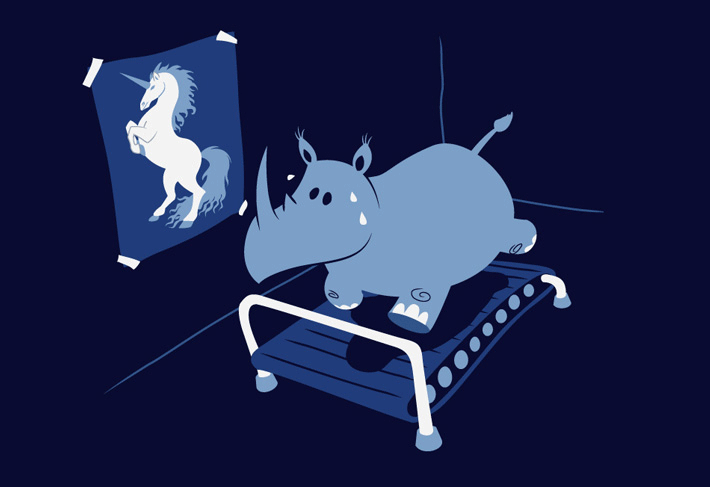
Do you think this poor rhino is ever going to look like the unicorn, no matter how long he runs? What about when you consider that unicorns don't even exist?
In a preview I read of a book that I'm impatiently awaiting Amazon to ship me, Healthy At Every Size, the researcher who wrote it talks about sitting down with the women who agreed to be part of her clinical trial. As is the nature of well-designed studies, half of the women were assigned to a "diet" group that did your standard low-fat, high-fiber, blah blah diet. The other half were assigned to the "Health At Every Size" protocol, which is basically about normalizing something called "eating competence" --i.e., convincing women that it really is okay to enjoy their food, trust their bodies, not weigh themselves, and that it would be okay if they didn't lose weight.
Because, in fact, losing weight and keeping it off below your body's setpoint is not possible.
One woman in the study shared how depressed she was to not be in the diet group, because she had thought being such a highly controlled diet would be sure to make her lose weight. Then she got to thinking: why am I so depressed? Why do I want to lose the weight so badly?
What motivates us to keep trying? I'm short and I don't like that, but I don't read growth books, attend heightening groups, or consider going to a salon to get stretched. That's because I just don't see my height as changeable. But weight is different. It seems like I should be able to change it.
When I start a diet, I have a feeling of hope. I was on a real high on my way to that first meeting. I let the fantasies run wild...I'll finally lose the weight. Guys will notice me as I walk by, my mom will say how proud she is, I'll have confidence when I apply for a job.
And then I heard Dr. Bacon say that weight loss may not be possible and would not be a goal. I felt like I had just been popped...Life didn't seem to be worth living without the hope that I could be thin.
But as this thought crossed my mind, it helped me see the extent of my magical thinking, how much I have been riding on the fantasy, why I keep trying so desperately to lose weight. Inside, I believe weight loss is the only thing standing between me and happiness. So if I never get thin, I can never be happy, I can never be the person I want to be. In that moment, I understood--it was the dream of weight loss that clouded my ability to be happy with myself, not the weight itself.
When you read, a while back on the blog, that there has NEVER been ANY diet EVER that worked, EVER, and that weight is mostly genetically determined, were you relieved or discouraged?
If you were like a lot of people, I bet you were discouraged until you started thinking about what it meant. Ironically, in weight as in all other things we try to control but really can't, the releasing of the illusion of control produces not chaos but freedom.
Need some examples of other things we try to control that aren't really amenable to control?
1. Talent--no matter how hard I try, I can't roll my tongue the way my brother and sister can, so that it looks like a piece of bologna. I grieved about this quite a bit at age 8 or so. More seriously, people spend a lot of money and heartache trying to force themselves into a particular talent slot, usually because someone they admire wants them to. (I'm looking at you, little league dads, and you, stage moms.)
2. Spirituality--again, no matter how hard I try or which mnemonic tricks I use, I don't do well at memorizing Scripture unless it's set to a song. Set it to a song, and then I can memorize it as easily as you can recite "867-5309". For years I felt this method of Scripture memory didn't count. Then I realized that since 1) this is the exact way that monks memorized all 150 Psalms in the middle ages and 2) I'm not competing in an AWANA program, it doesn't matter that "put an index card on the bathroom mirror and repeat the verse while you brush your teeth" doesn't work for me. And it's silly to envy the people it does work for.
3. Kids--sleeping, specifically. You can lead a kid to bed but you can't make him sleep. This becomes obvious if you think about the fact that you can't even actually make yourself sleep when you're not sleepy, but there are countless books who assume that if your kids are up late, even if you've provided good structure you are doing something wrong.
4. Global warming/the environment--we're just not so big that the emissions we make can wreck the whole planet.
5. Relationships--everyone knows, superficially, that you can't control the people in your relationships. But the amount that we try anyway is evidenced by both personal experience and the plethora of articles on things like, "how to get your man to remember your birthday" and "get what you want...without nagging" and "five tips to a more intimate marriage".
The idea that we should control something that is actually impossible for us to control is a source of great effort, pain, and frustration. It's also the original deception.
It's my contention that as creatures we really aren't ever in control, except when the Lord delegates very specific portions of control to us. We are either controlled by the Lord, or by sin. We don't have the option to control ourselves--we never have--that was what the lie in Eden to "be like God" was about.
In another irony, it's the bits of control the Lord delegates to us that we generally insist are out of our power: controlling what we say, for instance, or whether we let our eyes linger lustfully on someone, or whether we'll nurse an unforgiving thought or reject it. Those things, which God tells us to do in Scripture, we insist are beyond our control.
But the other stuff? In spite of repeated failures and overwhelming evidence to the contrary, we insist we can, if we just apply the right formula, control almost everything else about ourselves.
The lure of this is the same as the lure of any kind of self-defined righteousness. Those of us who are relatively thin can, with social approval, look at fatter people as proof that we are Good and they are Bad. Those who have the kinds of lives that allow for a two-hour quiet time per day can (God forbid) look smugly at the single mom with two jobs and four kids who gets a verse every two days, and feel sure they are more spiritual. Those who eat only organics can look down on those who can only afford Ramen and the occasional Twinkie, and those who practice "simplicity" can look down on the person who secretly loves Precious Moments figurines.
It's all a lie. Whenever we make an external measure the definition of righteousness, we're falling into the same trap that the New Testament church did in regards to circumcision. While some of the markers we use to judge others may indeed be desirable things to attain, when we make them the measure of our value we make them into idols, pure and simple. As a society we've done this with weight in a huge way--and if you don't believe me, just listen to the way people talk about fat people for about a week. In the American church, we're not much better.
(Witness all the "Christian" weight loss programs that say that if you are fat, you're not only lazy, uninformed, dumb, and sick, but in sin. They quote that "body is a temple" verse and don't ever bother to mention that, in context, Paul is talking about whether one should have sex with prostitutes. Um. Does not seem to generalize well to food to me...)
Let's repeat again: even though it seems at first that if we let go of control, we will spin into chaos, the result of admitting that God is in control is not chaos, it's freedom.
Freedom to quit, as C.S. Lewis puts it, all the "posturing, and preening, and aren't-I-a-good-boy?" Freedom to stop spending our lives on meaningless, unwinnable pursuits. Freedom to think about something else, for Pete's sake.
I wish I was further along myself. I still feel weird if I'm in a restaurant with littler women and they order something like a chicken salad, while I order a big ol' burger and fries because I'm starving. I feel like they're looking at my plate and internally raising an eyebrow. (Maybe they are, who knows; more likely they're just eying my fries because they're hungry.) I still order the burger; I'm hungry. It's one more thing to trust the Lord with.
Let's close with a little catchphrase that popped into my head this morning. To be a little bit like the Oracle in Mystery Men, "Whatever it is you try to control, winds up controlling you."
Something to think on.
Cheers,
Breanna
I Suppose I Should Clarify
It's not that I don't want you to use physician care when you need it. Most physicians are good at their jobs and care about their patients.
Not this guy:

...but most of them.
Dr. Oz is actually a good example of the kind of doctor you don't want to consult. He is very personable, and very much likes explaining things to people in a convoluted and condescending way, but in actual fact he's a cardiac surgeon who speaks about nutrition, an area outside his education, and being a cardiac surgeon he understandably has a bias toward surgery. He also is trying to sell a series of books, endorsements, and stands to make a lot of money if you think you are unwell.
Let's give the guy the benefit of the doubt--I'm going to assume he really wants to help people. After all, I don't know him and I doubt he set out rubbing his hands together and evilly cackling, "ha ha, I know what I'll do, I'll write a book, go on Oprah, and get EVERYONE to go on statins and do my diet! bwahahahaha!" More likely, I think he is just very busy and did not take the time to go and read the original studies for and against the positions he advocates.
For instance, the whole belly fat thing? Yeah. Not a cause of early death or diseases. "Correlated" with diseases in the same way that having feet or blinking is. But, as Mr. Todd taught us in Intro to Statistics, Correlation Is Not Causation.
So Dr. Oz is just mistaken. Honestly mistaken, probably, since his guidelines simply regurgitate those of the CDC and the WHO, and since pharmaceutical companies spend a lot of money convincing doctors to prescribe their cholesterol-lowering drugs.
I don't think pharmaceutical companies set out to kill people, either. But it takes anywhere from 10-25 years to develop a new drug. I think that, about 25 years before statins (cholesterol drugs) were developed, we weren't sure whether blood cholesterol was causing heart disease or not. Now we know that both are probably mostly genetic, and that neither dietary nor drug intervention does a lot. But, I'm sure the companies reason, surely some reduction is better than nothing, and the drugs won't hurt people with high cholesterol, and we did spend millions developing it.
Except that cholesterol drugs can hurt some people. They can do liver damage, or even when they function precisely as hoped, they generally take money, time, and mental space from people without an equivalent benefit. They are an example of the reasons that you should, when a doctor proposes something long-term to you, ask them about the research or (better) do your own research, looking at the original studies. PubMed is one place to see studies. The ones you're looking for are "clinical trials", not "epidemeological studies".
So I am not ever discouraging you from going to the doctor when you have bacterial pneumonia, a broken leg, are having a heart attack, or just feel funny and don't know what's wrong. If you've found a doctor you're comfortable with and who listens to you, you've likely found someone who has enough professional strength to prescribe what's right for you instead of what the drug reps tell them to. (Most doctors are less impressed with drug reps than the conspiracy theorists like you to believe, by the way.)
Doctors are excellent at fixing you when you are sick. They are not so great at keeping you from getting sick in the first place, as they would be the first to admit. Here is something drastic to consider:
Is it even their job?
I mean, given that we've been trying as a nation for about a hundred years now to do "public health administration" or preventative health care administered by the government. Public health has worked best when it's things like "quit spitting your tuberculosis on the sidewalk and get your measles vaccine", and least when it's things like "quit having unplanned babies and eat more vegetables". Perhaps this is because the government crossed the line between the area where they actually have authority--keeping me from hurting others--into the area where they don't--my private reproduction and diet. Thank goodness they haven't been sucessfull, because quite frequently their ideas about reproductive health and diet have been wrong, discovered only after people have been hurt.
So, in my opinion, preventative health care is not a physician's job. They have enough to do just taking care of sick people, and at least in this country don't have the resources to do much more for you than prescribe pills. Keeping myself well is my own job, and in that I'm greatly aided by a wise body that God designed to let me know when I'm not well.
The clarification then is: Don't stop using medical care. We are not going to be those people who walk around with a broken wrist chewing strange wild berries and rubbing peanut oil on it because we're afraid of the hospital, right? We're not going to be the people who have heart attacks and then don't seek care, right? Use medical care. It's a blessing. Just don't expect more from it than it can give.
Cheers,
Breanna
P.S. As an example, I'm going to the midwife this very morning. I've done my research--prenatal care is one of the best ways to take care of a baby. So don't use the failure of public health policy as a reason to avoid doctors altogether; just realize, like I did, that it actually makes a ton of sense that the government administers health recommendations as well and wisely as it does the budget.
Sunday, September 12, 2010
Feeding Babies (Toddlers) and Yourself
I guess I don't really have babies anymore, at least not until Littleman is born. What I have now is a toddler (Buddy) and a preschooler (Miss Boo). *sniff!*


More often than not this is how it starts out, with people sitting everywhere except where they're supposed to.

Paddy gets considerably more interested with the actual food shows up.

...Mostly because of this guy, who loves to eat, but who also loves to throw stuff on the floor as an experiment to see 1) which sound it makes and 2) what the dog does. Dogs that eat are awesome.

She likes to eat too, although she's more skeptical about the whole process than her brother. She always has been. He eats like a lumberjack, she eats more like...a skeptical preschooler. She eats enough, has never fallen off her curve, and can apparently subsist happily for days at a time on milk, the tinest morsels of broccoli, and yogurt. I worried, like all moms, when she was tiny and consistently hating rice cereal, that I would starve my baby to death.

Luckily we have a good doctor who kept repeating, "she's tiny, but she's never fallen off her curve; this is normal for her" and I found Ellyn Satter's book, which emphasized that some kids just don't eat as much as others. Thus armed, when Buddy came along and began regarding every meal as "You mean I get yogurt?!?! SCORE!", I was not alarmed that he would turn into a tank-child. My kids are the sizes they are meant to be, and (this is key) I haven't fed either of them differently than each other. For each meal we all sit up to the table, I dish up the food--or let them dish up, if it's something easy like pinneaple pieces and they can hold a spoon--and then they eat or not. That's it.
I don't care if all they eat is applesauce, or bread, or if they eat their dessert (homemade, generally) but not their peas. I don't care if they eat three helpings of peaches and no spinach, or--something Miss Boo often does--a lot of salad and ranch dressing and no meat, or if she just drinks milk. I don't even get too worked up if they don't eat anything. I know there is a snack coming along in a couple of hours, and the non-eater will probably be hungry enough by then to be happy to eat cheese and crackers and milk.
Because I followed the same procedure with each of them, and because they're so different in their eating personalities, it's incredibly reassuring that the way they eat is not something I did/can do.
Oh, I could make mealtimes a lot more stressful and unpleasant for all of us and try to force the designated USDA number of servings of everything into my kids, letting Buddy get heartbroken because I wouldn't give him more mandarin oranges, and I could get all tangled up in butting my will against that of the same two-year-old who once insisted on wearing her shoes to bed for a whole week. I could make eating a painful thing, not be able to enjoy my own meal, and mess with my kids' internal regulatory system as well as my own, because chances are if I'm that uptight about my kids' eating, I'm going to be beating myself up, too.
And what would the result be? Buddy would still probably eat more than Miss Boo and stay in the center of the growth charts, and she would still probably be at the 5th percentile, because that's the size they are meant to be. And I would probably start exhibiting the behaviors of people who have their food restricted by themselves or others: food preoccupation, sneaking "forbidden" foods without being able to enjoy or feel satisfied by them (because I feel guilty and horrible for eating them), and gaining weight beyond my natural setpoint because restricting tells my body that there isn't enough food, so I better store while I can. If I panicked and restricted more tightly, I would (God forbid) pass these behaviors on to my kids, besides giving them the message that their God-given bodies aren't good enough.
Looking at the two alternatives, I just don't think it's that important whether they eat their peas.
The ironic thing is, with this conscious decision to release the control of whether my kids eat: they eat. They eat a lot of things that kids their age aren't supposed to like--like spinach, raw green beans, hummus, smoothies ("ice cream" Miss Boo calls them, not because she's never had the real stuff, but because it's evidently a category that means "sweet and cold") and salmon. They're healthy, happy, energetic kids, and mealtimes are generally relaxed and fun.
So here's my challenge, to myself and to all of you:
Why not do yourself the same courtesy? The articles I referenced below are helpful to figure out how, and I have a book coming in the mail that I will review here for more information, but it's really not that complicated. Do yourself the favor of knowing when you're going to eat and allowing yourself three good meals plus sit-down snacks if you need them. (Us pregnant ladies do.) Eat as much as you are hungry for, of foods you find enjoyable, and listen to the wisdom of your body. It knows what it's doing! The God who made you doesn't make mistakes!
Even if you don't lose weight, which I can't predict and which really isn't an important measure of health, people who eat in the way my kids eat--happily--are healthier by all traditional measures (except size) than skinny people who restrict and worry themselves into skinniness, even if the skinny people are using all sorts of "healthy" behavior like running on treadmills and dutifully pouring flaxseed into their bran flakes.
Of course, this is all easy to say and hard to do. We live in a society where we are shown stickish people as beautiful and told that anyone with a curve is somehow a paradox if they are pretty. If this was just Hollywood it would perhaps be easier to ignore--after all, Hollywood believes that 9/11 was a CIA setup and that L.Ron Hubbard was a prophet. But we're told by people that seem trustworthy that we should all be watching what we eat very, very carefully, and that if we don't we are both ugly AND irresponsible--and costing all the skinny people extra in their taxes, to boot. It's hard to fight all those messages, especially when they come from doctors. The problem is that doctors get their information on "healthy body weight" from the government (the CDC) and the World Health Organization, which is a CDC made up of officials from a bunch of governments. Doctors are well-intentioned, very busy, and don't have time to read studies, so they trust the CDC and the WHO, who after all have proven to be pretty good at keeping people from dying of smallpox.


They shouldn't, in this case. Fatness isn't smallpox.
When the government and the WHO set up the guidelines for BMI, they mapped population-wide BMI with a Bell curve like this:

Now, things that are distributed this way across a population--whether it is intelligence, height, or ability to pat your head and rub your stomach--are "normally distributed". In other words, most of the population falls in the bulge in the middle, with a very few at either extreme. There will be some people who are closer to zero--very small people, as regards weight--and some people closer to 100--very large people. But MOST of the population will be somewhere in between, with a small amount smack in the middle.
The government, when making BMI recommendations, drew a line at 50, like above. This happens to be at the BMI of 25.
Then they recommended that everyone with a BMI of more than 25 lose weight. (They also, reluctantly, stated that those with a BMI of less than 18.5 might be unhealthy, although all the evidence is that low BMIs are far, far more dangerous to people than high BMIs. Like, they can cause cardiac arrest, bone fractures, and make you more likely to die early.)
The problem with this is twofold. First of all, people don't have health problems until their BMIs get well above 25--closer to 45, actually, with really serious problems only way over on the extreme at a BMI of 50.
But the biggest crock about the whole idea is that it misinterprets the very concept of a Bell curve. By definition, half of the curve is always going to be "above average"--or fat, in this instance. That is what "average" means in a Bell curve. Always. If everone loses weight, it just shifts the curve downward. What it will mean is that more people will be dangerously underweight relative to their bodies' setpoints, but there will be the same number of "above average" or "fat" people in the population, because it's the nature of the graph.
So when you hear the ominous news that we are having an obesity epidemic, or, in the words of Mrs. Skinner, "Children are so fat these days--can't we make money off of that?" realize that when they say "half of all Americans are overweight or obese" THIS is all they are talking about.
Yes. Apparently in order to be a journalist or work for the WHO, you did not have to learn math.
Keep this in mind when that little voice pops up to say, "you shouldn't have any sour cream on your potato" or "you shouldn't eat so much" or "if you do that, you will be fat".
Tell that voice to shut up. Instead ask, "am I hungry? does the food still taste good?" and give yourself the freedom to eat as long as it is pleasurable, and stop when it isn't anymore. That's it.
Simple, but effective for everyone.
Cheers,
Breanna
Subscribe to:
Posts (Atom)