I don't know why I'm surprised.
Every December 31 I look back at the previous year and think, "wow, it was really a good year...but man, I did not think it would have happened this way". And I haven't even had anything really strange happen to me, like winning the lottery or becoming a Joe the Plumber or something.
But last year at this time I was sitting around, playing a game with my brother- and sister-in-law (that's two inlaws--how do you properly hyphenate that?), feeling that I'd be in one place for at least another three to five years. This year I sit in the living room that has been stripped down so as to make my for-sale house look bigger, thanking the Lord for making it so bitterly cold outside that only the very stupid are venturing out to blow fireworks. (Because fireworks wake the kids.) And thinking about our new town in Texas, where the high today was supposed to be 70 degrees. (The high here was 6.)
I also was not expecting Littleman, last year.
So really, moving across the country and having a baby, all at the same time--odd, not how I would have planned it, but happily there is a sovereign, loving God who knows more about these things than I do, and He knew that this was the best way for it to happen. If I'd have been setting things up, I would have arranged them in a way that makes sense to my puny human brain, and I'd very likely have caused the moon to go hurtling into the sun, metaphorically speaking. So, flippant as it seems like I'm being, I really am grateful to the Lord for not giving me that kind of power.
While it is one of the doctrines that is hardest for humans to grasp--mostly, I think, because we really want to be sovereign ourselves--it's so comforting to keep reminding myself that God is in charge. (Therefore, it doesn't really matter if the kids decide to be fire engines and run in circles, whooping and holding spraying sippy cups of milk, while the grownups are trying to shampoo the carpet with the Loudest Carpet Steamer On Earth. Really.) He already knows who is going to buy our house and why and which house we're going to have in our new town. He already knows exactly when Littleman will finally decide to fly the coop. (I shouldn't be saying "finally" yet--we're only at 36 weeks on Sunday--but it sure feels like "finally".) He already knows, for that matter, exactly which day I'm going to die on. Sort of removes the urgency about everything, doesn't it?
Of course there is still so much to do as I face the new year. (Or rather, so much to boss the Husband about doing, since I am not allowed to do anything.) Relying on God's sovereignty doesn't mean that I sit around, twiddling my thumbs, waiting for the work to miraculously do itself--even the disciples still had to haul their nets full of miraculous fish into the boat. But it means that if something comes up to make it so I can't do the work (fire engines?) then I accept that from His hand, instead of gnashing my teeth in frustration.
I admit I tend to gnash. Quite a lot.
New year's resolutions are pretty silly, but after collecting enough odd years, I think I can venture to make this one: this year, I will try to see Him working in things like knocked-over piles of laundry, muddy dog feet, and milk-spewing fire engine children, as well as in safe travels, healing, and sound sleeps. Maybe I will gnash less.
Cheers,
Breanna
Friday, December 31, 2010


Monday, December 20, 2010
A Bit of Rambling
I should have a more coherent post on this topic in a while. A book I want, but can't quite justify buying this month (our Amazon.com bill is going to be inordinately high), is The Well-Educated Mind. I downloaded the sample to my Kindle, and read the first two and a quarter chapters. Mostly what I've been thinking about, beyond the idea of reading classical literature to become a more educated person (I'd like to have a broader base), is how Bauer describes the process of serious reading. She says there are three steps:
1. Reading to find out what the piece actually says--Bauer, because of her classical education background, calls this a "grammar" reading for technical reasons that don't really concern us. This is when you read and, as much as you can, keep a neutral frame of mind.
2. Reading to decide whether what the piece says is true or false (as far as it goes--obviously we don't expect a novel to be factually true, but we can evaluate whether the way it paints men and women is accurate or faulty).
3. Only after doing the above do you read to decide your own reaction to the piece. Ideally in this stage you speak or write about your conclusions, as clearly and elegantly as possible, in order to organize your response.
Most people, Bauer points out, jump straight to number 3 and start reacting to a piece. In my opinion, this comes both from our education ("Write a paragraph about how the poem made you feel") and our own inclinations--we all tend to think that our experience of something is the only experience that really counts.
For instance, I remember a column I read by a black editorial writer several years ago. The writer was aghast because a group of sincere but misguided people had raised a hoopla about a public official who used the word "niggardly" in speaking to his staff about budgets. "Niggardly" sounds a lot like a very offensive word, but is unrelated to it either in meaning or in derivation. (A bit like "formicate"--to move in an ant-like fashion--and "fornicate"--a word everyone knows.) The editorial writer bemoaned that people were reacting emotionally to a situation they didn't understand, and then continuing to react emotionally even after they had the situation explained to them. The official ended up resigning,
It occurred to me that the explanation for the above misunderstanding, and a lot of other misunderstandings, might be just that people genuinely don't know there is a difference between what a writer says and their own reaction to it.
Very often, it seems, we read or listen to someone without paying any kind of attention. We are so inward-focused that we're watching our own reactions and planning what we're going to say instead of being sure we actually understand what the other person is saying. I always thought this was sort of on purpose--that the person busily constructing their refutation of what I was saying instead of paying attention was just being perverse. It never occurred to me before that they might not actually know how to listen to me--or even realize that they're not listening.
So as a little gift to anyone who reads this blog, do me a favor. (I'm going to consciously work on doing this myself, as I read.) Next time you listen to a politician, preacher, or your boss, or even just that guy at the coffee shop who insists on telling everyone What's Wrong With Kids These Days, before you react, even in your mind, be sure you know what the person is actually saying. (Note: being able to state clearly what the other person is arguing does not mean you agree with them, it just means you paid attention.) It might just revolutionize the way you see the world.
Cheers,
Breanna
1. Reading to find out what the piece actually says--Bauer, because of her classical education background, calls this a "grammar" reading for technical reasons that don't really concern us. This is when you read and, as much as you can, keep a neutral frame of mind.
2. Reading to decide whether what the piece says is true or false (as far as it goes--obviously we don't expect a novel to be factually true, but we can evaluate whether the way it paints men and women is accurate or faulty).
3. Only after doing the above do you read to decide your own reaction to the piece. Ideally in this stage you speak or write about your conclusions, as clearly and elegantly as possible, in order to organize your response.
Most people, Bauer points out, jump straight to number 3 and start reacting to a piece. In my opinion, this comes both from our education ("Write a paragraph about how the poem made you feel") and our own inclinations--we all tend to think that our experience of something is the only experience that really counts.
For instance, I remember a column I read by a black editorial writer several years ago. The writer was aghast because a group of sincere but misguided people had raised a hoopla about a public official who used the word "niggardly" in speaking to his staff about budgets. "Niggardly" sounds a lot like a very offensive word, but is unrelated to it either in meaning or in derivation. (A bit like "formicate"--to move in an ant-like fashion--and "fornicate"--a word everyone knows.) The editorial writer bemoaned that people were reacting emotionally to a situation they didn't understand, and then continuing to react emotionally even after they had the situation explained to them. The official ended up resigning,
It occurred to me that the explanation for the above misunderstanding, and a lot of other misunderstandings, might be just that people genuinely don't know there is a difference between what a writer says and their own reaction to it.
Very often, it seems, we read or listen to someone without paying any kind of attention. We are so inward-focused that we're watching our own reactions and planning what we're going to say instead of being sure we actually understand what the other person is saying. I always thought this was sort of on purpose--that the person busily constructing their refutation of what I was saying instead of paying attention was just being perverse. It never occurred to me before that they might not actually know how to listen to me--or even realize that they're not listening.
So as a little gift to anyone who reads this blog, do me a favor. (I'm going to consciously work on doing this myself, as I read.) Next time you listen to a politician, preacher, or your boss, or even just that guy at the coffee shop who insists on telling everyone What's Wrong With Kids These Days, before you react, even in your mind, be sure you know what the person is actually saying. (Note: being able to state clearly what the other person is arguing does not mean you agree with them, it just means you paid attention.) It might just revolutionize the way you see the world.
Cheers,
Breanna
Sunday, December 19, 2010
It's Coming
Actually I've been a week off on the Advent thingies--I should have started in November--but mishmashing things together, I've been thinking about the Joy Sunday and Mary, and looking down at this huge belly of mine and being grateful I'm not bumping along on a donkey on a dirt road in Israel.
I will be bumping along in a Ford Explorer on an interstate to the various grandparents' this week, so if I'm quiet you all know why.
The presents are wrapped, except for one small one.
The lists of "what to take for Christmas" are getting made up.
The kids are noticing there aren't many doors left to open on the advent calendar.
It's almost time. :)
Cheers,
Breanna
I will be bumping along in a Ford Explorer on an interstate to the various grandparents' this week, so if I'm quiet you all know why.
The presents are wrapped, except for one small one.
The lists of "what to take for Christmas" are getting made up.
The kids are noticing there aren't many doors left to open on the advent calendar.
It's almost time. :)
Cheers,
Breanna
Monday, December 13, 2010
...Off To One Side of Texas!
Pee Wee: No, really Dottie, I'm in Texas! Here, I'll prove it. (Leans out of phone booth into crowded cafe.) The stars at night are big and bright--
Everyone in cafe: (CLAP CLAP CLAP CLAP!) DEEP IN THE HEART OF TEXAS!
--PeeWee's Big Adventure

....Only we'll be so near the border we'll be barely in the state, so I'm not sure that will work--we'd have to sing, like the title, "Off to One Side of Texas!" but I will confess that the first thing I thought of when it was confirmed that we are moving was, "I wonder if I could do that in the grocery store...just to see if it would work."
The second thing I thought of was "AAAAAHHHAHAH!" and the third thing was "I'm so proud of the Husband", because the reason we're moving is that he has officially been recognized by the company as an Up And Comer. The plant where we are going is the biggest plant in the company--cost half a billion dollars to build--and is brand-new, and they want Capable People to make sure the thing starts making money right away. So they picked him, naturally. (I say; I have always known I married a Capable Person.)
This is all exciting and everything and I'm trying to focus on the positives and not let the unknowns...or some of the knowns...get my pregnant mind going too much.
For instance, there is the whole living-in-the-south thing. I'm sure it will be great, but I've never done it before, and I only know two ways to fix grits. I suspect that living somewhere with actual *humidity* will require me to be more persnickety about hanging up towels and putting flour from the bag into a bin. I might even have to refrigerate my bread.
Then there's the wildlife-where-there-is-no-snow thing; the Husband informs me that they have alligators there. And wild boars. And possums. And such.
It can't be worse than having wolves and weasles and rattlesnakes, right? And I'm pretty sure that unless we have a water feature in the yard (cross that off list right now) that the alligators wouldn't come into a suburban residential area and eat the dog. I hope. Maybe we'll study repitles for our January preschool/kindergarten/keep 'em busy topic.
But I'm exaggerating to be funny (mostly--there really are gators); I think there will be a lot of advantages, too, like having these mysterious things I read about online called Ethnic Grocery Stores and being only a couple of hours from Dallas, should we want to go to a football game in that huge big stadium.
Expect a lot of moving-type posts on this blog, in short; perhaps I'll hit on some amazing organizational techniques to share with you all. So far I've done two things--make a moving binder to hold all my lists, and inventory the Little Pantry and the Big Pantry so we can use up our stored food. (You know anyone who wants 20 lbs of pinto beans, 5 lbs of salt and 10 lbs of cornmeal? Who isn't a grizzled 1860s prospector?) The inventory was a good idea, because it pointed out I've got a lot of little goodies like pudding mix and dried fruit that I'd kinda forgotten about. We'll be living high on the hog until we move.
Miss Boo thinks Texas is about an hour away; Buddy could care less, having as much concept of geography as he does of political science. Here's hoping they find the house-hunting plane trip exciting and not horrible...but I figure that all those other people on the plane will only know me for two hours anyway, and if I bring along enough Starbucks gift cards, maybe the people surrounding us won't lynch us on the tarmac.
Did I mention that we won't be (midwife's orders) househunting until Littleman is born? So yes, I'll be nursing on the plane. New experiences all around.
Cheers,
Breanna
Thursday, December 9, 2010
"Sparkles"
Here are the two kid sweaters I knitted over Thanksgiving, when I was otherwise a (very pregnant) slug:

(Buddy isn't always thrilled with having his picture taken, particularly when he's muscling in on his sister's keyboard time.)

(Um, yeah, that's the potty chair. We're on it a good percentage of the day, because we're just not reliable when asked whether or not we have to go, so we're going with the "prove it" method.)

We decorated sugar cookies yesterday. It was the oddest sugar cookie recipie I've ever seen--the one from "America's Test Kitchen"-- and called for two sticks of butter and two tablespoons of cream cheese, and no eggs. Very strange. Tastes good, though.

Buddy did pretty well with decorating--lasted almost 5 minutes befrore starting to eat the decorations off the cookies.

Miss Boo loves anything with "sparkles" involved. We had green and red sparkles; it was awesome.

Buddy's tree (I helped with the icing and the red dots...he shook out the sparkles).

She picked out her own outfit, by the way, backwards-facing-kerchief and all. You may not believe me, but all the fashionistas will be wearing backwards kerchiefs next season. You just wait.

"I think it needs green sparkles, Mama. I need some more green sparkles."

They didn't eat the cookies whole--they just ate the top layer with frosting on it. Which was sort of efficient, as you could then re-frost the semi-eaten cookie.

The cream cheese makes 'em yummy.

Mama, having no powdered sugar and being lazy, got the pre-mixed can of frosting. Sue me, you're lucky I made cookies at all this year. I could have bought the tin of shortbread and called it good.

These are the ones I decorated, because I didn't want ALL of them to be re-frosted...
She is a normal kid, so don't mistake this next part--I'm hope I'm not just biased, but I might be--but thought I'd share that on Saturday she read a book for the first time. It was the first book ("Mat") in the Bob Books, a very simple set of first readers. We haven't been pushing her academically, but she loves letters and numbers and wants to know what sounds the letters make, and we've just been letting her go as fast as she wants. So on Saturday she sat on my lap and sounded out, "M-at s-at" and so on through the book.
(Can you tell I'm trying to be offhand and not burst with pride?)
Cheers,
Breanna
Tuesday, December 7, 2010
Holiday Knitting and Such
Well, this is the week we find out whether the Husband's employer (otherwise a lovely company) will be asking us if we would like to move 1700 miles. Probably. You all can be praying for us; perhaps understandably I have little else on my mind, except when Littleman decides to slug me in the spleen.
He is 32 weeks along this week, and seems much bigger than his brother or his sister were (although he measures right on track and I haven't gained as much weight as I did with his brother). I am starting to get to that point where I think illogical thoughts like, "if I don't clean out that pantry it won't get done before the baby's born, and what if someone wants to make tamales while I'm at the hospital?"
Yes, I know it's extremely unlikely that 1) the grandmas watching the older two will get the sudden urge to make tamales and 2) that they would be offended by having to look behind the packets of cocoa to find the corn husks, but logic makes no dent in the way my brain decides to remind me about the corn husks between 17-19 times per day. It's just easier to clean the pantry, in some ways. I have a big enough belly that I can't tie my own shoes, so...
You may wonder what the title of this post has to do with anything so far. Well, I have to do something to keep sane while Miss Boo and Buddy run around throwing magnetic letters at each other and trying to sit two little bottoms on one potty chair. I like to knit, and have discovered that somehow a circular knitting needle doesn't inspire the same tendency to dueling in the children as straight needles do. Therefore, I've been working on tons of circular knitting projects. I include no pictures since they are Christmas presents. Knitting lends itself to relaxation and also time for lots of prayers that go something like "purl two...and please, if You want us to move, You're going to have to make the plane trip work out...purl four...because I don't know how I'm going to keep a newborn, a two-year-old, and a three-year-old happy for a couple of two-hour-flights...slip, knit, pass slipped stitch over...and I might slug the first person who looks at me cockeyed for having a passel of kids, and then they would ground the plane...knit two together, purl...and I wonder if diaper wipes count toward the four-ounce-liquid thing?"
Looking back this is a pretty boring post, but I felt I owed you an update, just so you all could participate in my antsy-ness and pray for us. We're asking the Lord to show us, in a large, clear way what He wants us to do. Pray that we hear Him clearly, and then have the guts to do it either way?
Cheers,
Breanna
He is 32 weeks along this week, and seems much bigger than his brother or his sister were (although he measures right on track and I haven't gained as much weight as I did with his brother). I am starting to get to that point where I think illogical thoughts like, "if I don't clean out that pantry it won't get done before the baby's born, and what if someone wants to make tamales while I'm at the hospital?"
Yes, I know it's extremely unlikely that 1) the grandmas watching the older two will get the sudden urge to make tamales and 2) that they would be offended by having to look behind the packets of cocoa to find the corn husks, but logic makes no dent in the way my brain decides to remind me about the corn husks between 17-19 times per day. It's just easier to clean the pantry, in some ways. I have a big enough belly that I can't tie my own shoes, so...
You may wonder what the title of this post has to do with anything so far. Well, I have to do something to keep sane while Miss Boo and Buddy run around throwing magnetic letters at each other and trying to sit two little bottoms on one potty chair. I like to knit, and have discovered that somehow a circular knitting needle doesn't inspire the same tendency to dueling in the children as straight needles do. Therefore, I've been working on tons of circular knitting projects. I include no pictures since they are Christmas presents. Knitting lends itself to relaxation and also time for lots of prayers that go something like "purl two...and please, if You want us to move, You're going to have to make the plane trip work out...purl four...because I don't know how I'm going to keep a newborn, a two-year-old, and a three-year-old happy for a couple of two-hour-flights...slip, knit, pass slipped stitch over...and I might slug the first person who looks at me cockeyed for having a passel of kids, and then they would ground the plane...knit two together, purl...and I wonder if diaper wipes count toward the four-ounce-liquid thing?"
Looking back this is a pretty boring post, but I felt I owed you an update, just so you all could participate in my antsy-ness and pray for us. We're asking the Lord to show us, in a large, clear way what He wants us to do. Pray that we hear Him clearly, and then have the guts to do it either way?
Cheers,
Breanna
Saturday, December 4, 2010
Waiting
This is the first week of Advent.
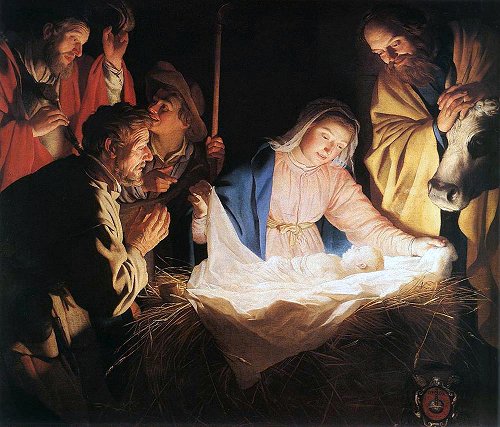
We have advent calendars for the kids that help us focus. It sort of puts each day in perspective, when you think about the longing for the Savior instead of How Many Shopping Days Are Left. (Bleah!)
I encourage you to make an Advent wreath for your table and try to do the Sundays, at least. This week is Waiting; you might try singing or playing "O Come O Come Emmanuel". The words have been playing in my head all week.
O come, O come Emmanuel
And ransom captive Israel
That mourns in lonely exile here
Until the Son of God appear
Rejoice! rejoice! Emmanuel
Will come to thee, O Israel
There's a scene in The Voyage of the Dawntreader (book, I dunno about the movie yet) where part of the crew of the Dawntreader is taken captive and sold as slaves on an island that has, for all intents and purposes, forgotten that it's under Narnian rule. One by one Caspian, Lucy, and Edmund are bought, but Eustace isn't. As Lewis points out, it's not fun to realize, even in a slave market, that nobody wants to buy you.
O come, Thou Rod of Jesse, free
Thine own from Satan's tyranny
From depths of hell Thy people save
And give them victory over the grave
Rejoice! rejoice! Emmanuel
Will come to thee, O Israel
One of the saddest parts in the movie The Fiddler on the Roof is when they are moved out of their village, and the tailor says, "We've been waiting for Messiah so long--wouldn't it be wonderful if He came today?"
Doesn't that make your heart ache? At the same time, do we long for His second coming as much as the people in darkness still long for His first, not realizing that He already came?
O come, Thou Dayspring, come and cheer
Thy people by Thine advent here
Disperse the gloomy clouds of night
And death's dark shadows put to flight
Rejoice! rejoice! Emmanuel
Will come to thee, O Israel
We have to remember that "Israel" in the song can have a dual meaning for us. In the medieval church, when this was written, the dominant teaching unfortuantely was that God was done with the Jews--His promises to them transferred to the Church. (This doesn't wash--God is not surprised by historical events, and His promises stand forever; I don't see why the Jews would be the one exception, especially since there are New Testament promises about them.) So when the song says "Israel", its authors most likely meant "YOU", if you are a Christian.
We can, more Biblically, understand it with the dual meaning. Christ the Dayspring has ransomed the Church; the Bible promises us that He's not going to leave the nation of Israel in darkness, either. When we sing "Come Emmanuel" we are both remembering what it was like to wait in the dark, and we are asking Him to come again.
Let's not pretend that we don't live in dark days. The world is not getting better and better. It can be frightening to look at our surroundings and realize how different they are from the way God intended them to be.
So this week, light your first Advent candle in the dark. Long for Messiah. And say, with the Apostle, "Amen! Come Lord Jesus!"
Cheers,
Breanna
Thursday, December 2, 2010
Montessori Review, And Thoughts
Well, first of all I'm not linking to the book. It's an unhelpful book, and I don't think you ought to spend the eight bucks for the Kindle version, let alone pay for the physical book. But just so you know what it's called, it's Montessori From the Start.
I should say that I've read only a bit of the actual writings of Maria Montessori, because first of all she was Italian writing in English (or being translated? I'm not sure which) and second of all she wrote at the beginning of the last century, and it's like trying to split firewood with your teeth to get through her style. As near as I can tell, however, the Montessori method falls prey to the same mistake that most educational methods tend to slip into, which is the idea that if we just educate a kid right we can have a perfect citizen.
(Let's take a second here to remind ourselves about what we know, if we're Christians: all people, including schoolkids, have sin natures; it's possible to educate kids in stupid or smart ways, but it is impossible to educate them so they 1) won't sin or 2) are forced to get saved. Right? Right. Only the Holy Spirit can transform a heart, and so we have to teach kids the Gospel and let God work. Right? Right. Therefore, no educational system will make perfect citizens, or even decent people, although some might jibe better with the realities of human nature than others. Right? Right.)
So you have to take what Dr. Montessori says with a grain of salt, especially considering the lady never had kids of her own, developed her theory by watching mentally handicapped kids, and developed it in the last century, when the social issues about childhood were a little different than they are now. Things might not generalize easily.
Getting back to Montessori From the Start. It is written not by Dr. Montessori but by a mother-and-daughter team; the mother is a public-school-turned-Montessori-teacher, and the daughter is a Montessori teacher, and they have at least one child they've raised in a Montessori fashion between them to reference. First the good bits from the book:
1. The idea of letting the kid do for themselves as much as possible.
This, I think, is just common sense, although it's easy to forget when you're trying to get socks on feet and are late already. Some of the applications of the idea struck me as good, though--for instance:
-Set up a little stool, soapdish, and towel for them to wash their own hands in the bathroom (this is a big hit so far at our house). Obviously this means you have to have child locks etc. in the bathroom so they can't scald, drown, or poison themselves in there.
-Have them set and clear their own places at the table. (Another big hit--although I need to make some placemats for them showing the relative positions of plate and fork and napkin.)
-Have them dress themselves as much as possible.
-Put their hairbrush, comb, and a mirror in a little basket and let them brush their hair, taking "your turn" afterward to tidy things up a bit.
-Let them wet their own hair to shampoo.
Other ideas in the book were not so great, like the one to wean the baby at six months, gate them into their room from birth so as not to "stifle their independence" (!?!?), and only letting them have certain, very specific toys, spurning whatever else the grandparents might come up with.
I'm all for quality, no-battery, low-plastic toys, and I am also a toy minimalist (we already have more than we need, in my opinion, so we rotate them) but I've also known the joy of wearing a plastic and rhinestone tiara and wooden cowboy guns (for shooting imaginary antelope, never people) are just not as fun as the shiny silver plastic ones that snap. Why be Pharisees about the issue?
Most of what bugs me about the book is the idea that we can train the child's will so she will be a Superior Person, one who is Not Easily Distracted Like the Dumb Kids. I don't know that this is what the authors meant to communicate, and I don't know enough about Montessori to know if it's a common flaw, but the idea permeates all the advice in the book like a deadly miasma. Get your baby these specific Montessori mobiles, not the one grandma gave you which is "mindless entertainment". (Bah, you don't like any mindless entertainment yourself now and then, do you? DO you? No football watching for you!) You must do things in exactly the right way, and then you will have exactly the right results, which is...a kid who will advance humanity. Somehow. In a nonspecified humanist sort of way.
The other idea that bothers me in the book, that I think might actually be endemic to Montessori theory, is the "it works for one thing so let's apply it to everything" idea. I.e., the kid likes having their hairbrush and all in a basket, so we have to keep the supplies for all activities in little individual baskets and make a theorem about it. Some kids (tactile learners) learn best by manipulating things, so we should introduce every idea by manipulation first, and make a theorem about it. (I know this one, a basic Montessori tenet as far as I can see, is not right, because I'm NOT a tactile learner and it just frustrates me to have to handle something before I can get to reading about it.)
In short, there's some useful things and some non-useful things, like all educational theories.
I was homeschooled by, as far as I know, no one theory in particular. Because I like research I've been looking into all the educational-type theories I run across, and have found this to be a pretty general pattern: some good ideas, some very kooky ideas, and some so-so ideas in each theory. I figure we won't be following any theory in its totality, but be prepared to read more educational ramblings like this one. Just as I give you permission to ignore my political posts, you may ignore my educational ones.
Right now we are still learning letters, numbers, and how to hold a pencil. My educational theory consists of the firm conviction that memorizing is good, allowing a kid to go as fast as they want is good, and playing to a kid's strengths is good. When I get more figured out I'll let you know.
Cheers,
Breanna
I should say that I've read only a bit of the actual writings of Maria Montessori, because first of all she was Italian writing in English (or being translated? I'm not sure which) and second of all she wrote at the beginning of the last century, and it's like trying to split firewood with your teeth to get through her style. As near as I can tell, however, the Montessori method falls prey to the same mistake that most educational methods tend to slip into, which is the idea that if we just educate a kid right we can have a perfect citizen.
(Let's take a second here to remind ourselves about what we know, if we're Christians: all people, including schoolkids, have sin natures; it's possible to educate kids in stupid or smart ways, but it is impossible to educate them so they 1) won't sin or 2) are forced to get saved. Right? Right. Only the Holy Spirit can transform a heart, and so we have to teach kids the Gospel and let God work. Right? Right. Therefore, no educational system will make perfect citizens, or even decent people, although some might jibe better with the realities of human nature than others. Right? Right.)
So you have to take what Dr. Montessori says with a grain of salt, especially considering the lady never had kids of her own, developed her theory by watching mentally handicapped kids, and developed it in the last century, when the social issues about childhood were a little different than they are now. Things might not generalize easily.
Getting back to Montessori From the Start. It is written not by Dr. Montessori but by a mother-and-daughter team; the mother is a public-school-turned-Montessori-teacher, and the daughter is a Montessori teacher, and they have at least one child they've raised in a Montessori fashion between them to reference. First the good bits from the book:
1. The idea of letting the kid do for themselves as much as possible.
This, I think, is just common sense, although it's easy to forget when you're trying to get socks on feet and are late already. Some of the applications of the idea struck me as good, though--for instance:
-Set up a little stool, soapdish, and towel for them to wash their own hands in the bathroom (this is a big hit so far at our house). Obviously this means you have to have child locks etc. in the bathroom so they can't scald, drown, or poison themselves in there.
-Have them set and clear their own places at the table. (Another big hit--although I need to make some placemats for them showing the relative positions of plate and fork and napkin.)
-Have them dress themselves as much as possible.
-Put their hairbrush, comb, and a mirror in a little basket and let them brush their hair, taking "your turn" afterward to tidy things up a bit.
-Let them wet their own hair to shampoo.
Other ideas in the book were not so great, like the one to wean the baby at six months, gate them into their room from birth so as not to "stifle their independence" (!?!?), and only letting them have certain, very specific toys, spurning whatever else the grandparents might come up with.
I'm all for quality, no-battery, low-plastic toys, and I am also a toy minimalist (we already have more than we need, in my opinion, so we rotate them) but I've also known the joy of wearing a plastic and rhinestone tiara and wooden cowboy guns (for shooting imaginary antelope, never people) are just not as fun as the shiny silver plastic ones that snap. Why be Pharisees about the issue?
Most of what bugs me about the book is the idea that we can train the child's will so she will be a Superior Person, one who is Not Easily Distracted Like the Dumb Kids. I don't know that this is what the authors meant to communicate, and I don't know enough about Montessori to know if it's a common flaw, but the idea permeates all the advice in the book like a deadly miasma. Get your baby these specific Montessori mobiles, not the one grandma gave you which is "mindless entertainment". (Bah, you don't like any mindless entertainment yourself now and then, do you? DO you? No football watching for you!) You must do things in exactly the right way, and then you will have exactly the right results, which is...a kid who will advance humanity. Somehow. In a nonspecified humanist sort of way.
The other idea that bothers me in the book, that I think might actually be endemic to Montessori theory, is the "it works for one thing so let's apply it to everything" idea. I.e., the kid likes having their hairbrush and all in a basket, so we have to keep the supplies for all activities in little individual baskets and make a theorem about it. Some kids (tactile learners) learn best by manipulating things, so we should introduce every idea by manipulation first, and make a theorem about it. (I know this one, a basic Montessori tenet as far as I can see, is not right, because I'm NOT a tactile learner and it just frustrates me to have to handle something before I can get to reading about it.)
In short, there's some useful things and some non-useful things, like all educational theories.
I was homeschooled by, as far as I know, no one theory in particular. Because I like research I've been looking into all the educational-type theories I run across, and have found this to be a pretty general pattern: some good ideas, some very kooky ideas, and some so-so ideas in each theory. I figure we won't be following any theory in its totality, but be prepared to read more educational ramblings like this one. Just as I give you permission to ignore my political posts, you may ignore my educational ones.
Right now we are still learning letters, numbers, and how to hold a pencil. My educational theory consists of the firm conviction that memorizing is good, allowing a kid to go as fast as they want is good, and playing to a kid's strengths is good. When I get more figured out I'll let you know.
Cheers,
Breanna
Subscribe to:
Posts (Atom)