Monday, September 13, 2010

I Suppose I Should Clarify

It's not that I don't want you to use physician care when you need it.  Most physicians are good at their jobs and care about their patients.

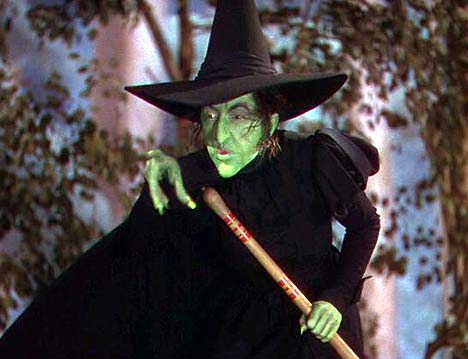
Not this guy:

...but most of them.


Dr. Oz is actually a good example of the kind of doctor you don't want to consult.  He is very personable, and very much likes explaining things to people in a convoluted and condescending way, but in actual fact he's a cardiac surgeon who speaks about nutrition, an area outside his education, and being a cardiac surgeon he understandably has a bias toward surgery.  He also is trying to sell a series of books, endorsements, and stands to make a lot of money if you think you are unwell.

Let's give the guy the benefit of the doubt--I'm going to assume he really wants to help people.  After all, I don't know him and I doubt he set out rubbing his hands together and evilly cackling, "ha ha, I know what I'll do, I'll write a book, go on Oprah, and get EVERYONE to go on statins and do my diet! bwahahahaha!"  More likely, I think he is just very busy and did not take the time to go and read the original studies for and against the positions he advocates.

For instance, the whole belly fat thing?  Yeah.  Not a cause of early death or diseases.  "Correlated" with diseases in the same way that having feet or blinking is.  But, as Mr. Todd taught us in Intro to Statistics, Correlation Is Not Causation.

So Dr. Oz is just mistaken.  Honestly mistaken, probably, since his guidelines simply regurgitate those of the CDC and the WHO, and since pharmaceutical companies spend a lot of money convincing doctors to prescribe their cholesterol-lowering drugs.

I don't think pharmaceutical companies set out to kill people, either.  But it takes anywhere from 10-25 years to develop a new drug.  I think that, about 25 years before statins (cholesterol drugs) were developed, we weren't sure whether blood cholesterol was causing heart disease or not.  Now we know that both are probably mostly genetic, and that neither dietary nor drug intervention does a lot.  But, I'm sure the companies reason, surely some reduction is better than nothing, and the drugs won't hurt people with high cholesterol, and we did spend millions developing it.

Except that cholesterol drugs can hurt some people.  They can do liver damage, or even when they function precisely as hoped, they generally take money, time, and mental space from people without an equivalent benefit.  They are an example of the reasons that you should, when a doctor proposes something long-term to you, ask them about the research or (better) do your own research, looking at the original studies.  PubMed is one place to see studies.  The ones you're looking for are "clinical trials", not "epidemeological studies".

So I am not ever discouraging you from going to the doctor when you have bacterial pneumonia, a broken leg, are having a heart attack, or just feel funny and don't know what's wrong.  If you've found a doctor you're comfortable with and who listens to you, you've likely found someone who has enough professional strength to prescribe what's right for you instead of what the drug reps tell them to.  (Most doctors are less impressed with drug reps than the conspiracy theorists like you to believe, by the way.)

Doctors are excellent at fixing you when you are sick.  They are not so great at keeping you from getting sick in the first place, as they would be the first to admit.  Here is something drastic to consider:

Is it even their job?

I mean, given that we've been trying as a nation for about a hundred years now to do "public health administration" or preventative health care administered by the government.  Public health has worked best when it's things like "quit spitting your tuberculosis on the sidewalk and get your measles vaccine", and least when it's things like "quit having unplanned babies and eat more vegetables".  Perhaps this is because the government crossed the line between the area where they actually have authority--keeping me from hurting others--into the area where they don't--my private reproduction and diet.  Thank goodness they haven't been sucessfull, because quite frequently their ideas about reproductive health and diet have been wrong, discovered only after people have been hurt.

So, in my opinion, preventative health care is not a physician's job.  They have enough to do just taking care of sick people, and at least in this country don't have the resources to do much more for you than prescribe pills.  Keeping myself well is my own job, and in that I'm greatly aided by a wise body that God designed to let me know when I'm not well.

The clarification then is: Don't stop using medical care.  We are not going to be those people who walk around with a broken wrist chewing strange wild berries and rubbing peanut oil on it because we're afraid of the hospital, right?  We're not going to be the people who have heart attacks and then don't seek care, right?  Use medical care.  It's a blessing.  Just don't expect more from it than it can give.

Cheers,

Breanna

P.S.  As an example, I'm going to the midwife this very morning.  I've done my research--prenatal care is one of the best ways to take care of a baby.  So don't use the failure of public health policy as a reason to avoid doctors altogether; just realize, like I did, that it actually makes a ton of sense that the government administers health recommendations as well and wisely as it does the budget.

Sunday, September 12, 2010

Feeding Babies (Toddlers) and Yourself

I guess I don't really have babies anymore, at least not until Littleman is born.  What I have now is a toddler (Buddy) and a preschooler (Miss Boo).  *sniff!*
More often than not this is how it starts out, with people sitting everywhere except where they're supposed to.

Paddy gets considerably more interested with the actual food shows up.

...Mostly because of this guy, who loves to eat, but who also loves to throw stuff on the floor as an experiment to see 1) which sound it makes and 2) what the dog does.  Dogs that eat are awesome.

She likes to eat too, although she's more skeptical about the whole process than her brother.  She always has been.  He eats like a lumberjack, she eats more like...a skeptical preschooler.  She eats enough, has never fallen off her curve, and can apparently subsist happily for days at a time on milk, the tinest morsels of broccoli, and yogurt.  I worried, like all moms, when she was tiny and consistently hating rice cereal, that I would starve my baby to death.


Luckily we have a good doctor who kept repeating, "she's tiny, but she's never fallen off her curve; this is normal for her" and I found Ellyn Satter's book, which emphasized that some kids just don't eat as much as others.  Thus armed, when Buddy came along and began regarding every meal as "You mean I get yogurt?!?!  SCORE!", I was not alarmed that he would turn into a tank-child.  My kids are the sizes they are meant to be, and (this is key) I haven't fed either of them differently than each other.  For each meal we all sit up to the table, I dish up the food--or let them dish up, if it's something easy like pinneaple pieces and they can hold a spoon--and then they eat or not.  That's it.

I don't care if all they eat is applesauce, or bread, or if they eat their dessert (homemade, generally) but not their peas.  I don't care if they eat three helpings of peaches and no spinach, or--something Miss Boo often does--a lot of salad and ranch dressing and no meat, or if she just drinks milk.  I don't even get too worked up if they don't eat anything.  I know there is a snack coming along in a couple of hours, and the non-eater will probably be hungry enough by then to be happy to eat cheese and crackers and milk.

Because I followed the same procedure with each of them, and because they're so different in their eating personalities, it's incredibly reassuring that the way they eat is not something I did/can do. 

Oh, I could make mealtimes a lot more stressful and unpleasant for all of us and try to force the designated USDA number of servings of everything into my kids, letting Buddy get heartbroken because I wouldn't give him more mandarin oranges, and I could get all tangled up in butting my will against that of the same two-year-old who once insisted on wearing her shoes to bed for a whole week.  I could make eating a painful thing, not be able to enjoy my own meal, and mess with my kids' internal regulatory system as well as my own, because chances are if I'm that uptight about my kids' eating, I'm going to be beating myself up, too.

And what would the result be?  Buddy would still probably eat more than Miss Boo and stay in the center of the growth charts, and she would still probably be at the 5th percentile, because that's the size they are meant to be.  And I would probably start exhibiting the behaviors of people who have their food restricted by themselves or others: food preoccupation, sneaking "forbidden" foods without being able to enjoy or feel satisfied by them (because I feel guilty and horrible for eating them), and gaining weight beyond my natural setpoint because restricting tells my body that there isn't enough food, so I better store while I can.  If I panicked and restricted more tightly, I would (God forbid) pass these behaviors on to my kids, besides giving them the message that their God-given bodies aren't good enough.

Looking at the two alternatives, I just don't think it's that important whether they eat their peas.

The ironic thing is, with this conscious decision to release the control of whether my kids eat: they eat.  They eat a lot of things that kids their age aren't supposed to like--like spinach, raw green beans, hummus, smoothies ("ice cream" Miss Boo calls them, not because she's never had the real stuff, but because it's evidently a category that means "sweet and cold") and salmon.  They're healthy, happy, energetic kids, and mealtimes are generally relaxed and fun.

So here's my challenge, to myself and to all of you:

Why not do yourself the same courtesy?  The articles I referenced below are helpful to figure out how, and I have a book coming in the mail that I will review here for more information, but it's really not that complicated.  Do yourself the favor of knowing when you're going to eat and allowing yourself three good meals plus sit-down snacks if you need them.   (Us pregnant ladies do.)  Eat as much as you are hungry for, of foods you find enjoyable, and listen to the wisdom of your body.  It knows what it's doing!  The God who made you doesn't make mistakes!

Even if you don't lose weight, which I can't predict and which really isn't an important measure of health, people who eat in the way my kids eat--happily--are healthier by all traditional measures (except size) than skinny people who restrict and worry themselves into skinniness, even if the skinny people are using all sorts of "healthy" behavior like running on treadmills and dutifully pouring flaxseed into their bran flakes.

Of course, this is all easy to say and hard to do.  We live in a society where we are shown stickish people as beautiful and told that anyone with a curve is somehow a paradox if they are pretty.  If this was just Hollywood it would perhaps be easier to ignore--after all, Hollywood believes that 9/11 was a CIA setup and that L.Ron Hubbard was a prophet.  But we're told by people that seem trustworthy that we should all be watching what we eat very, very carefully, and that if we don't we are both ugly AND irresponsible--and costing all the skinny people extra in their taxes, to boot.  It's hard to fight all those messages, especially when they come from doctors.  The problem is that doctors get their information on "healthy body weight" from the government (the CDC) and the World Health Organization, which is a CDC made up of officials from a bunch of governments.  Doctors are well-intentioned, very busy, and don't have time to read studies, so they trust the CDC and the WHO, who after all have proven to be pretty good at keeping people from dying of smallpox.

They shouldn't, in this case.  Fatness isn't smallpox.

When the government and the WHO set up the guidelines for BMI, they mapped population-wide BMI with a Bell curve like this:


Now, things that are distributed this way across a population--whether it is intelligence, height, or ability to pat your head and rub your stomach--are "normally distributed".  In other words, most of the population falls in the bulge in the middle, with a very few at either extreme.  There will be some people who are closer to zero--very small people, as regards weight--and some people closer to 100--very large people.  But MOST of the population will be somewhere in between, with a small amount smack in the middle.

The government, when making BMI recommendations, drew a line at 50, like above.  This happens to be at the BMI of 25.

Then they recommended that everyone with a BMI of more than 25 lose weight.  (They also, reluctantly, stated that those with a BMI of less than 18.5 might be unhealthy, although all the evidence is that low BMIs are far, far more dangerous to people than high BMIs.  Like, they can cause cardiac arrest, bone fractures, and make you more likely to die early.)

The problem with this is twofold.  First of all, people don't have health problems until their BMIs get well above 25--closer to 45, actually, with really serious problems only way over on the extreme at a BMI of 50.

But the biggest crock about the whole idea is that it misinterprets the very concept of a Bell curve.  By definition, half of the curve is always going to be "above average"--or fat, in this instance.  That is what "average" means in a Bell curve.  Always.  If everone loses weight, it just shifts the curve downward.  What it will mean is that more people will be dangerously underweight relative to their bodies' setpoints, but there will be the same number of "above average" or "fat" people in the population, because it's the nature of the graph.

So when you hear the ominous news that we are having an obesity epidemic, or, in the words of Mrs. Skinner, "Children are so fat these days--can't we make money off of that?" realize that when they say "half of all Americans are overweight or obese"  THIS is all they are talking about.

Yes.  Apparently in order to be a journalist or work for the WHO, you did not have to learn math.

Keep this in mind when that little voice pops up to say, "you shouldn't have any sour cream on your potato" or "you shouldn't eat so much" or "if you do that, you will be fat".

Tell that voice to shut up.  Instead ask, "am I hungry? does the food still taste good?" and give yourself the freedom to eat as long as it is pleasurable, and stop when it isn't anymore.  That's it.

Simple, but effective for everyone.

Cheers,

Breanna

Friday, September 10, 2010

Some Weekend Reading for the Zaftig

Because "zaftig" is a nicer word than the value-and-judgement-laden "overweight".  (Which implies there is an absolute standard of what someone should weigh out there somewhere--maybe in the book of "Revelations"?)

I have known some things for a long time but have only figured out that they are, like, science and junk while studying nutrition for my kids.  I offer this as food for thought, as we enter the weekend, and hope that it will be encouraging to my readers.

1. People know how to eat, and telling/forcing/shaming them into eating in an arbitrarily determined "good" way does harm.

2. There is no connection between being zaftig (fat even) and having heart disease.

No, you heard that right.  None.  Zip.  Nothing, in the research, for 50 years.

3. People's weight is largely genetically determined and there is no sucessful method for achieving and maintaining a lower body weight than your body wants to be.  ("But, people who don't eat lose weight... like anorexics and junk..."  Yes, anyone who doesn't eat enough will lose weight and keep losing, but they also die.  This doesn't sound "sucessful" to me.)

4. If you trust yourself and your body, that will not automatically put you at an unhealthy weight, though it may be an unfashionable one.

Finally,

5. Weight perception in America is about status, power, and fashion, much the same as footbinding was in ancient China.  Even though footbinding was painful, debilitating, and probably shortened women's lives, they still did it because the social rewards were so high.  Because mockery, discrimination, and cruelty toward fat people are very acceptable in our society (can you think of a sitcom without a fat funny guy to mock? can you remember when movies had a funny, poor-grammar-using black maid for the same purpose? do you think either is okay?), people will take drastic risks in order to be thin.

So read up on Ellyn Satter's How to Eat series.  And then go enjoy your breakfast, scrambled eggs, sausage, toast and marmelade, espresso, and all.  I give you permission.

Cheers,

Breanna

P.S.  And, despite what you may think, I who write this have never been what society calls "fat".  Although I have felt fat, and I have worked after each pregnancy to lose weight.  While I always started in the past with restrictive eating to lose weight, I can't (and no one can) maintain it, so I always fell back into eating more or less what felt right and working on allowing myself more time to move in pleasurable ways--gardening, belly dancing, etc.  It does work, although I can't force myself to weigh 150 that way.  When I lost an unhealthy amount of weight by working 12-hour-shifts and not eating before my wedding, I hit 148 and felt like crap, so I'm not sure where I came up with the idea that 150 was desirable, but hovering between 160 and 170 is where my body is happy, and I am eminently healthy.  So Nyaaah!

Being Independent With Your Health (Without Being A Green Witch)

Do I have to say that all medical advice/commentary on this blog should be considered educational only, and is to be used at your own risk?  You're more mature than to randomly believe some blogger you've never seen and then to turn around and sue her when you turn yourself blue, right?


Did you know "green witch" is a technical term?  It means a witch (yes, as in someone who practices either Wiccan, Dianic, or other witchcraft) who uses plants to aid her in casting spells, vs. say, just candles or bits of newt.  We aren't going there.  Let's be clear about what I think about herbs from the get-go, so nobody goes out and either eats poison hemlock or turns themselves blue like that guy who took colloidal silver internally:

1. Plants aren't magic, they are just plants.

2. Using herbs isn't inherently any safer than using "conventional" drugs.  Herbs are drugs.

3. Using herbs isn't any more virtuous than using conventional drugs.  Herbs are drugs.

4. Since herbs are drugs, it behooves anyone who wants to use them to learn a lot about them BEFORE they begin using them.  This means that you do not wander into the healthfood store armed with only something you read on the internet (on a page with little spinning .gif crystal pictures) that says that some obscure Chinese herb will probably be good for your diabetes, so you quit with the insulin and now want something you can't pronounce, which you will take home and put under your pillow.  No no no.  Herbs are not magic, remember?

5. Once you do decide to use herbs, be aware that they are less pure than conventional drugs most of the time, and therefore that effects may be 1) less predictable or 2) less instantaneous, but that they can also be 3) just as potent.  So don't mess around, or take twice as much as the recommended dose, or take something internally meant to be used as a salve--remember the guy who turned blue, ok?

6. Using herbs does not preclude using conventional drugs and using conventional drugs does not preclude using herbs, but before you use them  both together BE SURE YOU UNDERSTAND THE ACTION OF EACH.  Otherwise you might end up taking Coumadin and St. John's Wort at the same time, and bleeding to death when you smash your thumb.  I joke not at all.

7. If you are pregnant or breastfeeding, get this book and pay attention to it.  Do NOT use herbs that are safe for people who are not pregnant or breastfeeding.  Do NOT go pick something random in your backyard.  Do NOT use compounds that contain more than one herb that you did not mix yourself from single herbs you bought from a reputable source.  Do NOT use any of the cohoshes.  Do NOT just search the internet and use something that someone said sort of worked for them one time.  Are we clear about how conservative I want you to be?

8. If you decide to use herbs, don't lie about it to your doctor.  When he asks what medications you are taking, tell him.  If he scolds you or thinks you're crazy or forbids it, well, then go find another doctor who can disagree with you without treating you like a child.

So, with those concepts and cautions in mind, shall I tell you about how to become more independent with your health?

First of all, I think you should be more independent with your health because 1) I think it's good for everyone to be independent about their health, because it's theirs, not their doctor's and 2) with the advent of a very poorly concieved national healthcare system, I think people will have even less access to doctors and hospitals than we are used to in America. 

There are already (and I have been one) many people who can't afford to go to the doctor for anything except an illness they think might kill them.  This means that a lot of high blood pressure, dental problems, arthritis, lung, sinus, and bladder infections, and so on, don't get treated.  While I am never going to discourage people from consulting a physician (because they really are pretty smart sometimes), I think it's silly for someone with a UTI who can't afford an antibiotic/MD visit to simmer in misery for three weeks because they don't know how to go about treating it at home.  (Answer: lots of fluids, cranberry juice, and uva-ursi, but go look it up yourself.)  And since you think better when you are not feverish or in pain, I think it makes sense to learn about herbs while you feel reasonably good instead of flipping through a book or internet search while you are trying to pass a kidney stone.

I also dislike being entirely dependent on an expensive, monopolistic system for something as important and personal as my health.  Although I know how to speak the language of the system, and so get treated with more respect than a lot of patients, I also dislike dealing with a system that still, more often than not, treats me like a naughty, slightly retarded child rather than an intelligent, educated adult who might know something about her health that the practitioner does not.

This is getting long, so without more ado here are Breanna's steps to using herbal and natural remedies:

1. Educate yourself.  Read books, read the internet if you must, and talk to the nice, batty cat lady behind the counter at the health food store.  Keep reading until your sources are pretty much in agreement, and then follow the more conservative guidelines.  This means that if one book says, "totally use black cohosh to start labor in a woman who is overdue"  but four books say "cohoshes have been linked to cardiac arrest of the newborn", then you don't use the cohosh.  The same thing applies to books that are telling you how to manage your high blood pressure, etc.

1a. Remember that herbs are not magic, and so filter what you read in herbals.  Some plants have a reputation for doing a certain thing not because people actually have experienced that, but because the idea makes sense magically.  I.e., asparagus is supposed to help male fertility not because of observed effects, but because it...er, looks like it ought to, magically speaking.  Mistletoe, a toxic herb, has a very long history of being magical--at least back to the druids--and is sometimes recommended to make things more "potent".  It doesn't, it just damages your liver.  So when you run across statements in herbals (written by people with names like Susun Weed or Rosemary Gladstar or having titles like Gaia's Garden) be aware that some of their advice is very solid, but others, like the idea that standing in the moonlight will relieve female troubles, is magical.  If you are looking for this, you can ignore the magic bits--they are generally very up front about telling you which parts of their advice are based on "lore" and which parts are based on experience.

2. Realize that nothing, not even conventional drugs, are magic bullets.  That is, when switching to herbs for high blood pressure, you have to maintain your diet and exercise and all the other un-fun aspects of managing high blood pressure, just like when you were on lisinopril.

3. Treat starting a herb just like you would starting a pill.  Monitor the effects and how you feel, and realize that herbs cause side-effects just like drugs.  Continuing with the blood pressure example, you still have to keep taking your blood pressure.  If it doesn't stay down where it's supposed to, it's possible you need to stop the herbs and go back on the lisinopril.  It's important to be realistic.  I don't want you to have a stroke out of stubborn optimism.

4. Remember that nothing acts in isolation, and read up on side effects.  For instance, garlic helps blood pressure, but is also a blood-thinner.  If you are taking other blood thinners, like aspirin or warfarin, or if you are scheduled for surgery, or if you are a chef and likely to cut yourself, or if you are pregnant and need to avoid bleeding risks, you should NOT be taking garlic.  Understand how you have to think through the implications of your medicating?

5. Once you've read, understood, thought through, and cautiously introduced yourself to a herb, remember to use it only in a way and and amount that is safe and not to do silly things like taking twice as much, or taking something meant to be used occasionally every day, or combining things that have the same effect, or lying to your doctor about whether you take herbs.  Remember even vitamins can cause trouble when your doctor doesn't know that you are taking them.

Confused yet?  I'll be talking more about being independent with your health in later posts.  Consider this an introduction.  I only have one more piece of advice: get your herbals from the library before you buy them, and get a good field guide to wild plants (with color pictures) before you go picking anything in your yard--and get good at using herbs you buy from reputable sources before you start picking them yourself.  As an example of why this is a good idea, what I always though was nettle turns out to be thistle, according to my field guide.  Nettle is a good herb for pregnancy, but thistle is a good herb if you want to make yourself sterile.  On such mistakes horror stories are built, ok?

On that spooky note, I leave you.

Cheers,

Breanna

P.S. Oh, and if you live in America, don't screw around with Chinese herbs.  The ones we can get over here are usually contaminated with various poison substances like lead, or aren't the herb they are labeled as.  I just don't mess with them.

Tuesday, September 7, 2010

It's...

A Boy!

I have a very definite ultrasound snapshot to prove it.  I was going to post that pic, which the sonographer helpfully typed "it's a boy!" on, but I think I'll sift through for one of the face ones.  My son might get mad at me in the future if I post evidence of his gender on the internet for everyone to see.

So, sonogram photos soon, and now you know.

Cheers,

Breanna

Monday, September 6, 2010

Belly Pics

Tomorrow I should have some ultrasound pictures, but until then, this will have to do:


Just look at the belly.  I don't like pregnancy pictures of myself from the neck up--I get puffy in the face, as a lady at church was once kind enough to point out to me.  I also discovered that 1) this pregnancy I can't wear my contacts 2) I need to grow my hair out, and it's a process and 3) I can't wear makeup without making my zits worse.

But, heigh ho! At least tomorrow we find out whether the kiddo who is treating their mother so cavelierly is a boy or a girl.

Cheers,

Breanna

Friday, September 3, 2010

I Can't Think of a Worse Idea


...than saying God told you to burn the Koran. 

Well, ok, I can think of some ideas that are worse, but I don't want to write them on this blog lest the guy come over here, read them, and decide to:

1. Ride a bike across a tightrope with no net

2. Let a pitbull lick peanut butter off his fingers

3. Throw mud at random people in restaurants

4. Start making claims to be a prophet

5. Utterly ruin the credibility of any Christian, anywhere, who is trying to build any kind of friendship or talk to any Muslim, ever.

Oh wait, maybe he's doing all those things already.  4 and 5 definitely have a familiar ring to them.

Would all the crazies please, please remember that Christ told us to love our enemies--yes, even the ones that persecute and kill us, He was talking about Rome--and pray for those who hate us?  Even if you define Muslims as enemies, you still are not allowed to hurt and insult them, because you self-identify as a Christian, and refusal to treat enemies that way is one of the defining characteristics of the faith.

See, we can't get around it.  We are supposed to love everyone, friends, enemies, everyone.  This doesn't mean you have to agree with everything they do, or that you have to say that all religions are the same (they aren't).  It means you have to recognize that every person is created in the image of God, and so you don't get to despise any of them.

And from a practical standpoint, if I was a Muslim and considering converting to Christianity, why on earth would I do so after watching a crazy guy burn a Koran?  Do you think that watching an imam burn a few hundred Bibles would cause waves of doubt to go through our young people?  Did burning Beatles albums cause great revivals in the 60s?  Did burning books win Hitler any points?

Can I get a supporting call of "bull puckey" from the gallery, please?

Breanna

P.S.

For the record, I own a copy of the Koran in English and am slowly working my way through it, not because I ever intend to convert to Islam, but because I think it's silly not to have actually read the source document of a religion before trying to talk about it.  Otherwise you sound like people who make statments like "doesn't the Bible say the Earth is only 6,000 years old? somewhere on the first page?"